26 September 2026
Secrets of Hallmarks and TimePart 1. The Secret Codes of Liège: Chalk Autographs, Flemish Labels, and a Shell of Soot
Part 1. The Secret Codes of Liège: Chalk Autographs, Flemish Labels, and a Shell of Soot
Once we’d fully freed the tall case of the Paulissen 1774 clock from its movement and removable panels, a hidden archive emerged under the beam of a restoration flashlight. A floor clock from this era isn’t just a piece of furniture — it’s a genuine diary of time. On the dry inner surfaces of centuries-old oak and walnut, marks left behind by the masters of the past came into view. Studying them turned into a gripping detective process.
A reminder for readers: we still don’t claim academic expertise — we’re simply sharing hands-on, tangible experience, step-by-step techniques, and material-science secrets.
Chapter 1: Investigating the hidden chalk inscriptions
Under raking light, sprawling old inscriptions made in lump chalk appeared on the inner side of the back panel. The specific Baroque-era spelling, flourishes, and centuries of wear kept the words from resolving into anything a modern reader could make sense of. The letters remained a mysterious cipher.
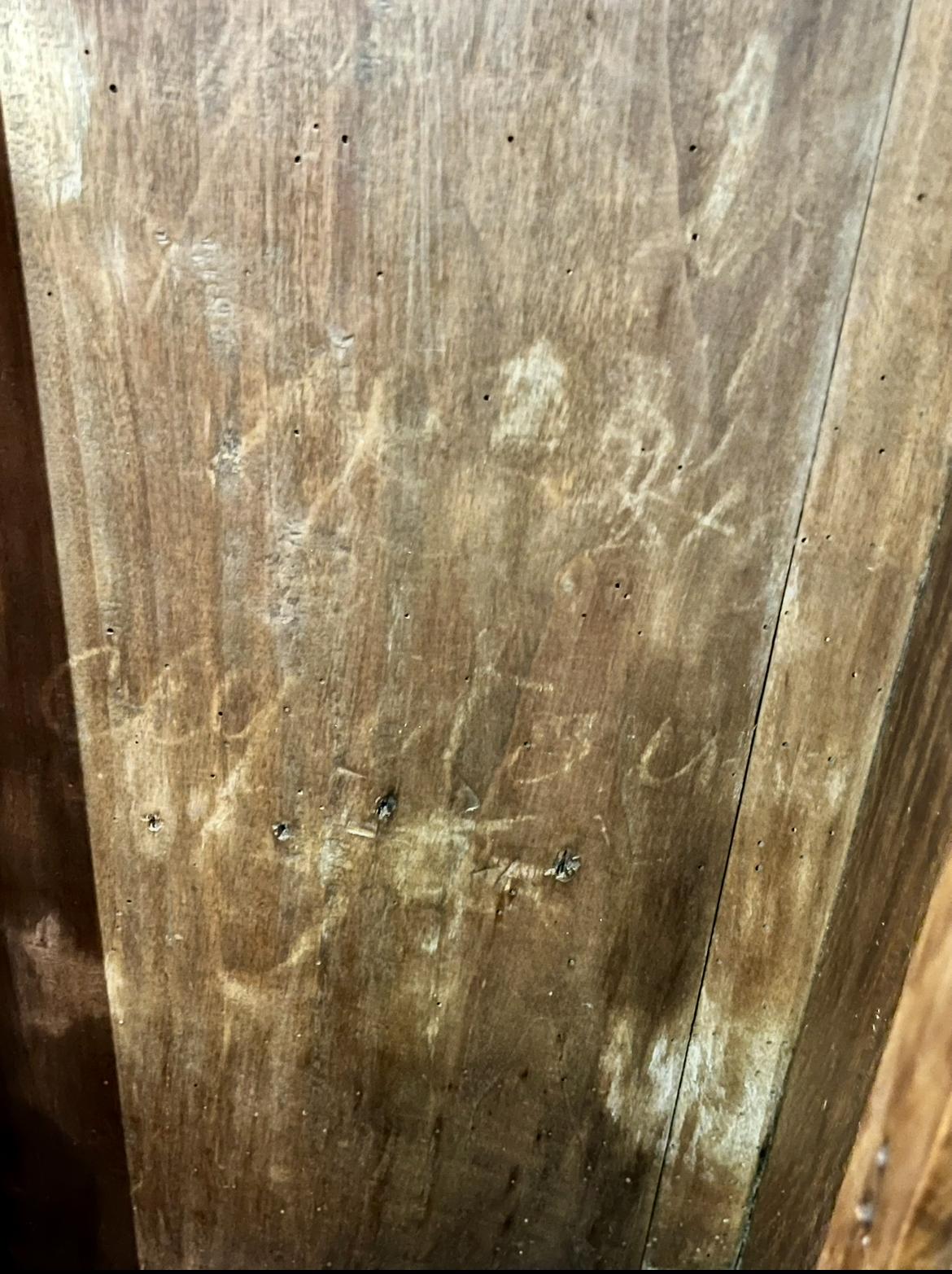
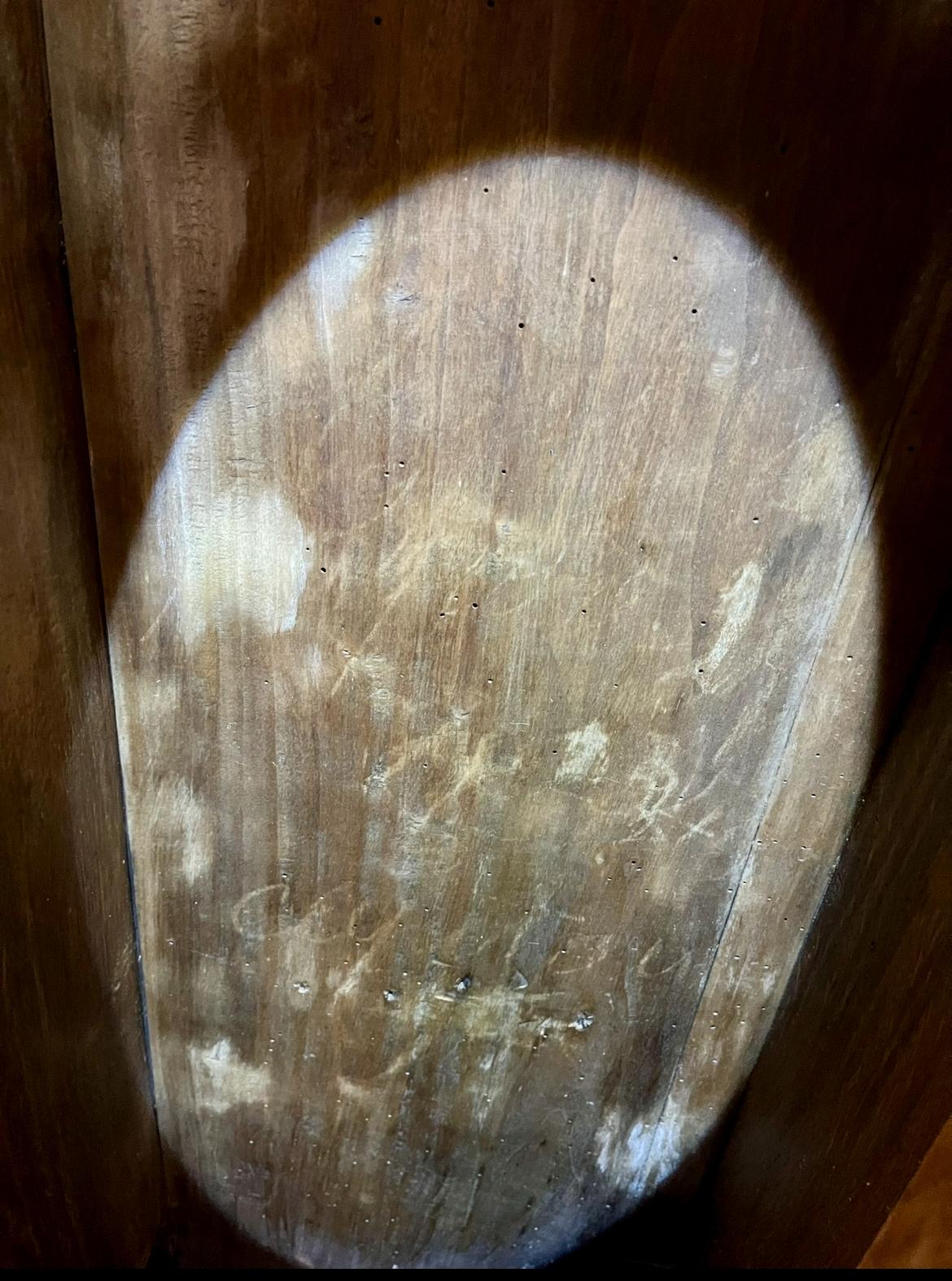
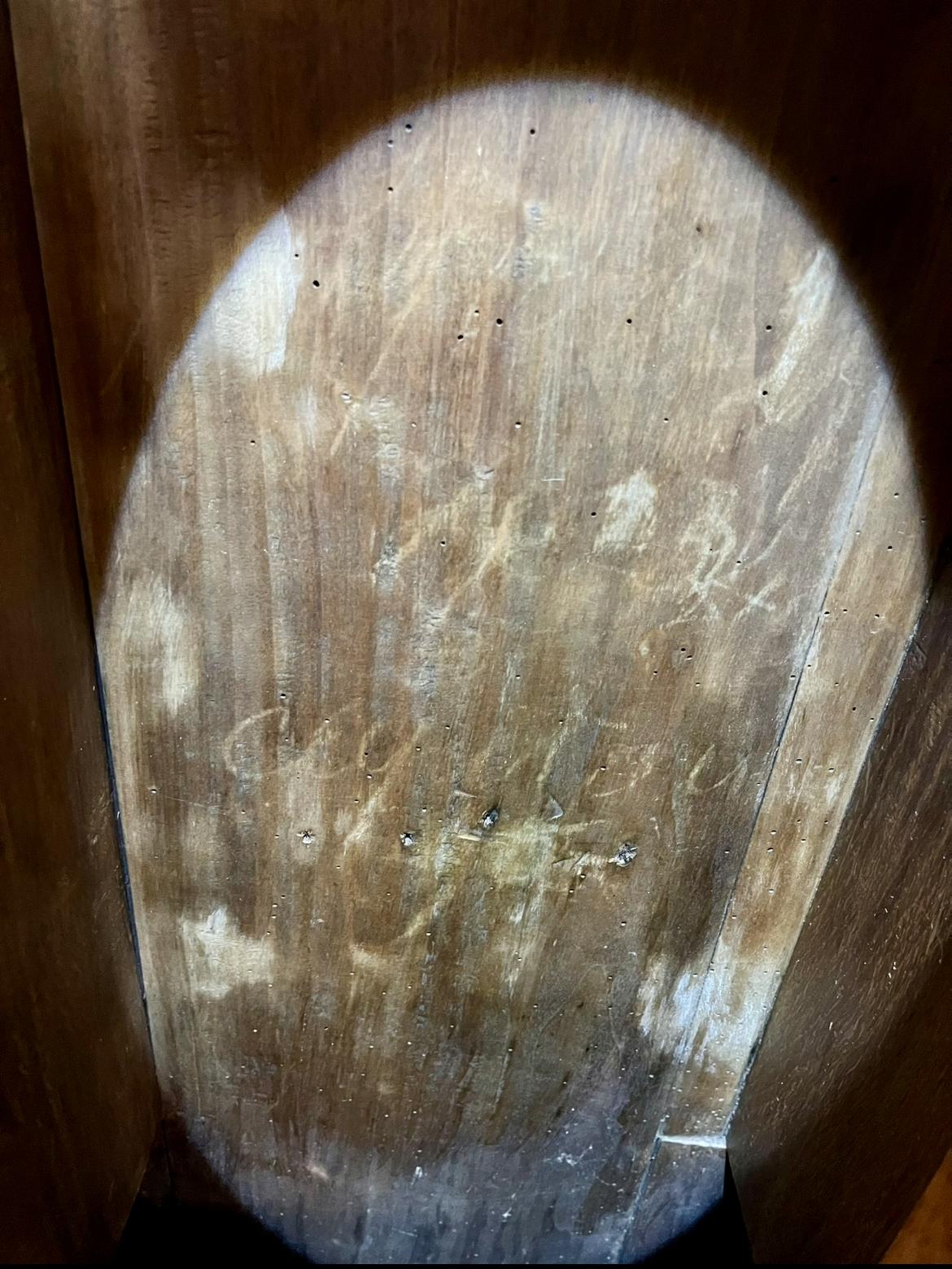
A detailed analysis, done together with Gemini, revealed the professional meaning behind these marks:
- Assembly worker marks (matching codes): a floor clock of this scale was made in separate pieces — the fireplace-style case was cut by a cabinetmaker of the Liège school, while the forged brass “cube” of the movement was assembled by clockmaker Paulissen himself. The chalk marks are technical fitting codes, noting pendulum length, swing amplitude, and the individual fitting number matching a specific oak frame to the case’s runners.
- A maintenance diary: chalk marks on antique clocks are the classic signature of traveling clockmaker’s apprentices. Once every 20–30 years, they’d visit homes to clean the mechanism and flush the pivots. Each faint line is a recorded date of an escapement adjustment. Chalk on dry oak doesn’t flake off for centuries, as long as the wood is kept away from moisture.
A strict restoration decision: we decided to leave these chalk inscriptions exactly as they were, bone dry. Applying any liquid compound or natural wax was out of the question — polymers could instantly blur or make transparent the fragile chalk particles, permanently destroying these priceless historical autographs.
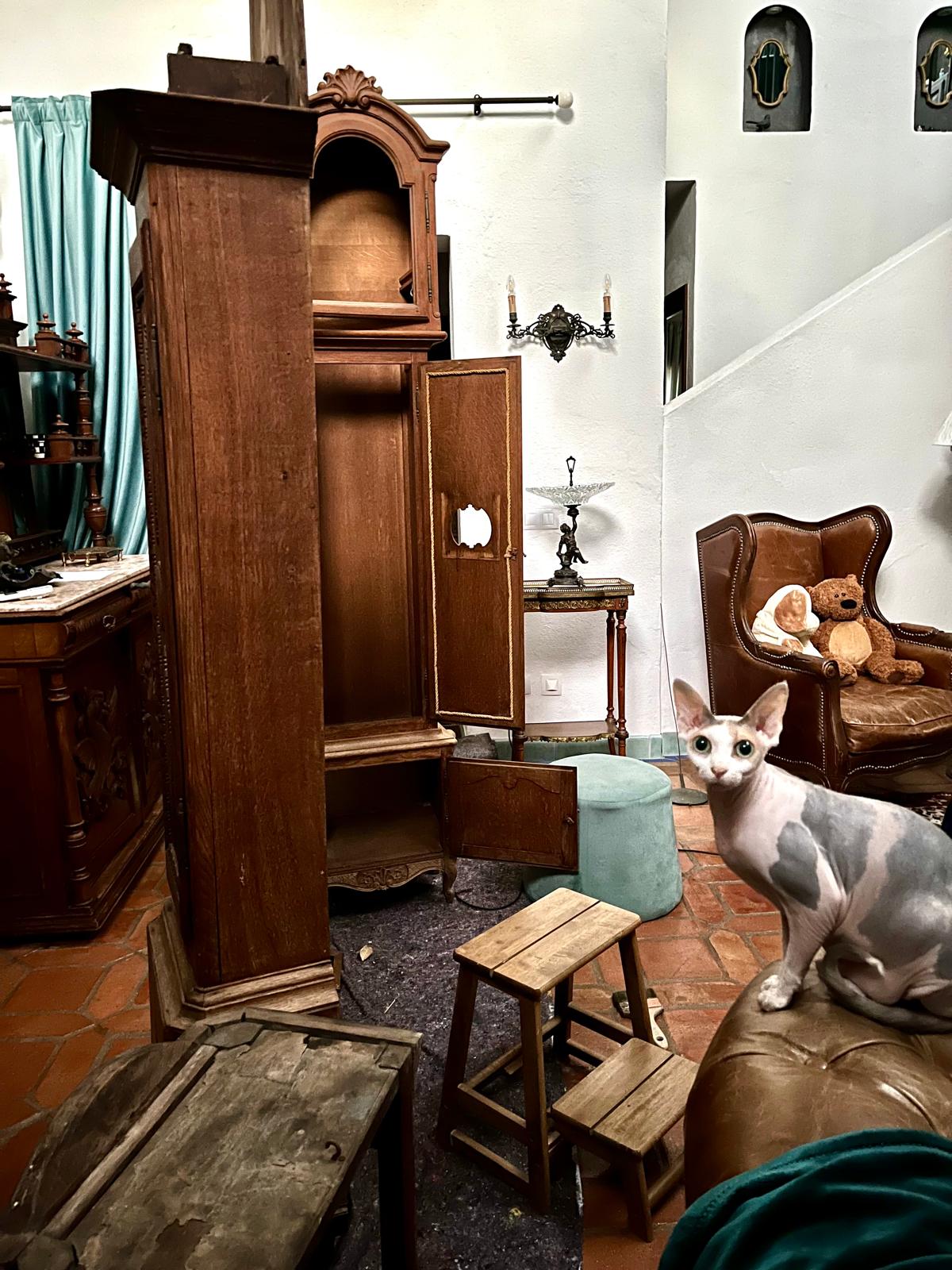
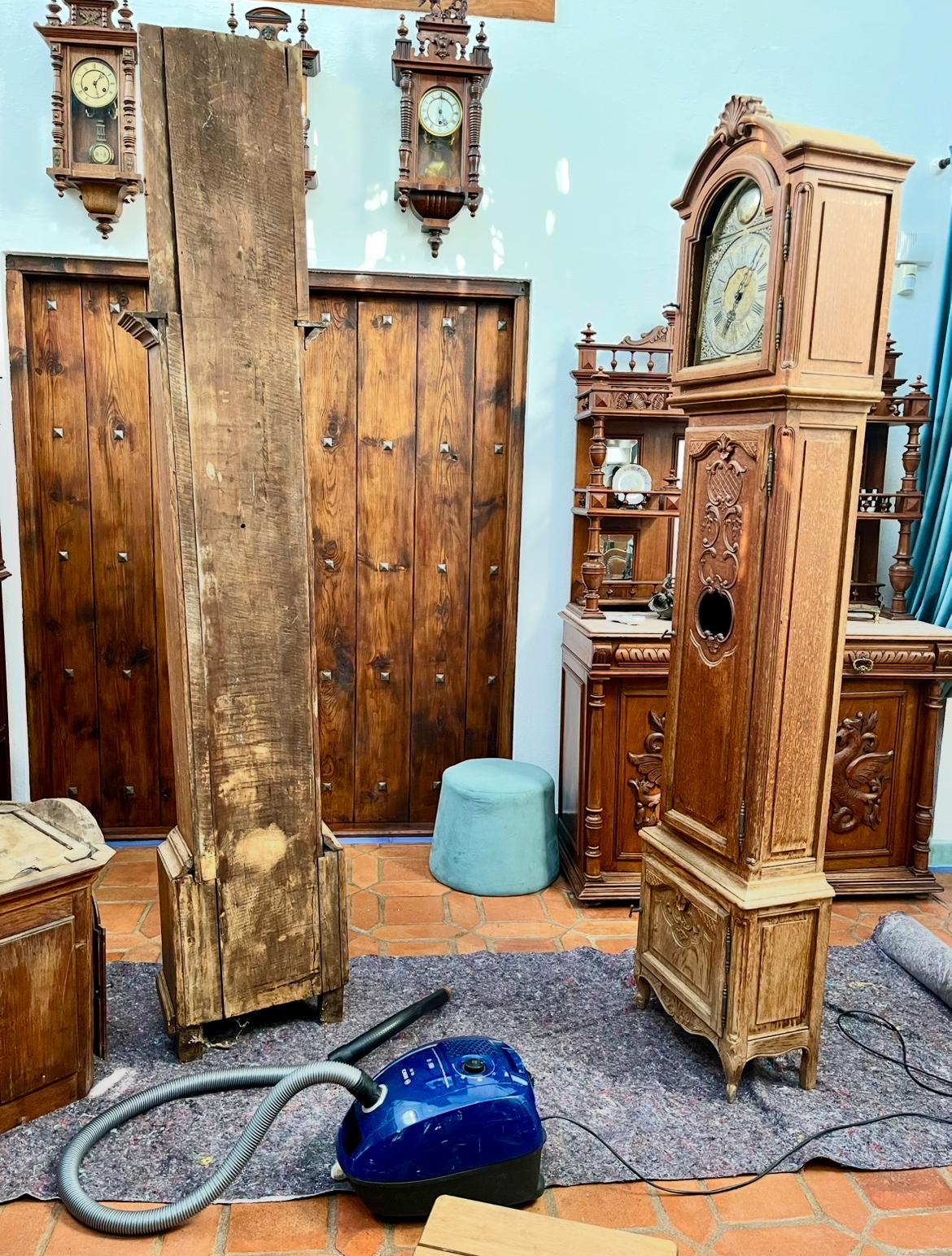
While we were thoroughly cleaning out the base’s inner cavities, our ever-present four-legged quality inspector kept a vigilant eye on the process.
Chapter 2: The mystery of the Flemish label on the shutter
The next major artifact was a partially surviving printed label with an ornate blue-and-black border, found on the inside of the hood’s removable side shutter.
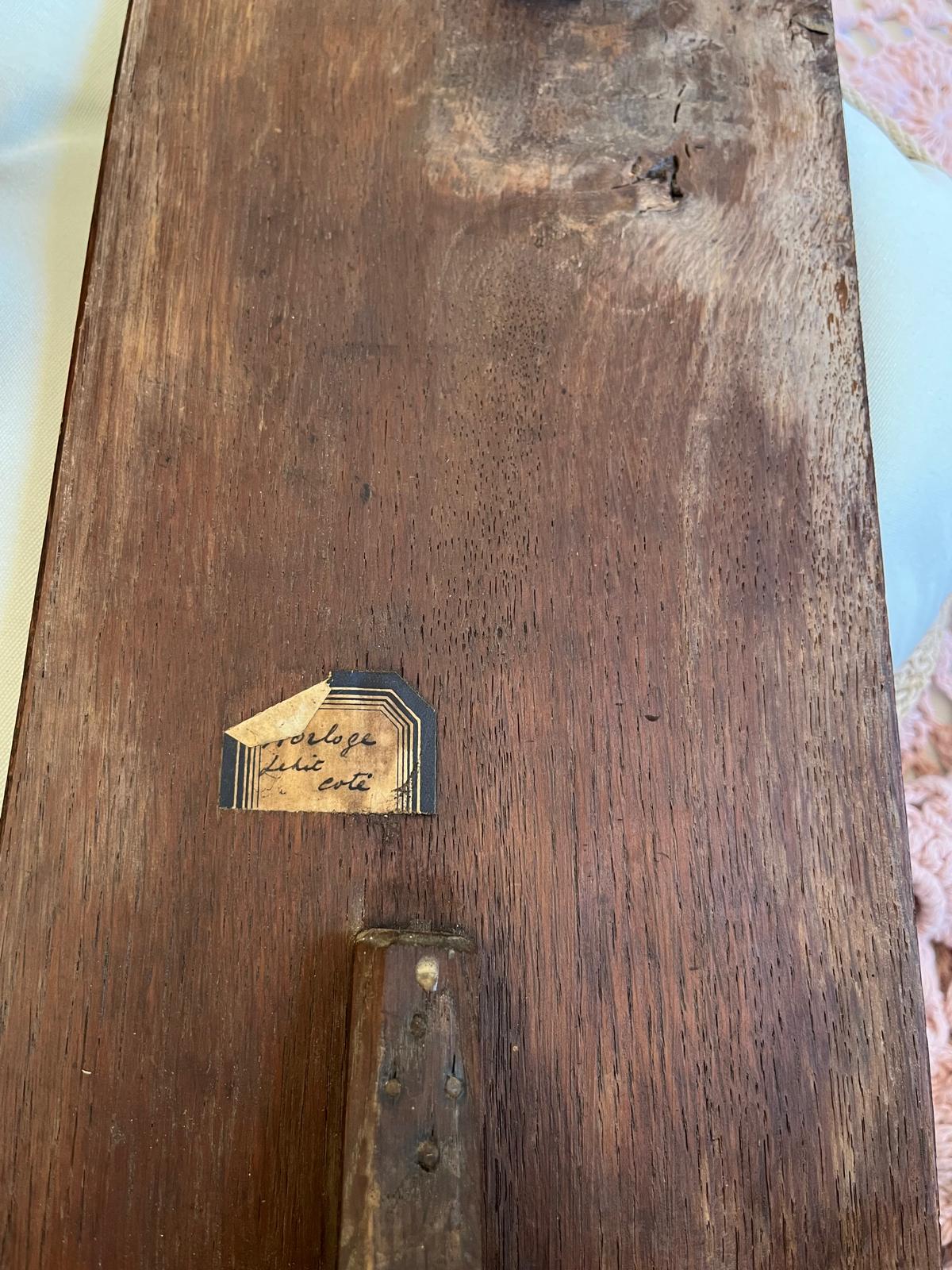
Under strong macro magnification, the iron-gall ink inscription reads “Horloge… Liège… coté” (“Clock… Liège… side”). Analysis of the border’s typeface and the laid-paper texture showed this to be an original customs or shipping tag from the late 18th century, or possibly an invoice from a logistics workshop.
Since Liège sat right at the crossroads of French-speaking and German-speaking lands, the inscriptions on the wood itself were most likely written in Old Flemish (a dialect of Dutch). To finally pull back the curtain on these texts, we made the truly neighborly decision to invite our Flemish neighbor into the workshop for a live linguistic breakdown of these Baroque abbreviations!
Chapter 3: Why is the hood black on the inside? The anatomy of soot
Moving on to studying the dismantled wooden “helmet” of the hood, we ran into an alarming anatomical feature: on the inside, every board of black walnut and oak was coated in a dense, opaque layer of coal-black buildup. It wasn’t paint.
Gemini’s engineering explanation: where did the black soot come from? The hood of a floor clock is a sealed thermal dome. In the 18th–19th centuries, homes were heated by open fireplaces and lit by tallow candles and oil lamps. Warm air, saturated with greasy soot, fireplace smoke, and lamp char, continuously rose and concentrated inside the helmet. Mixing with the volatile fumes of the bone oil used to lubricate the movement’s gears, this soot formed a solid, acidic, hydrophobic crust over 250 years. That’s exactly what staged the “dirty rebellion” when we first tried applying fresh wax.
Chapter 4: The paper flak jacket on the hood’s roof
Before conservation began, the most challenging element of the hood’s roof was a strange, grey-brown layered mass laid over the dried-out boards. In the “before” photos, you can clearly see how this ancient parchment had cracked, split along its seams, and was practically crumbling to ash at the slightest touch.
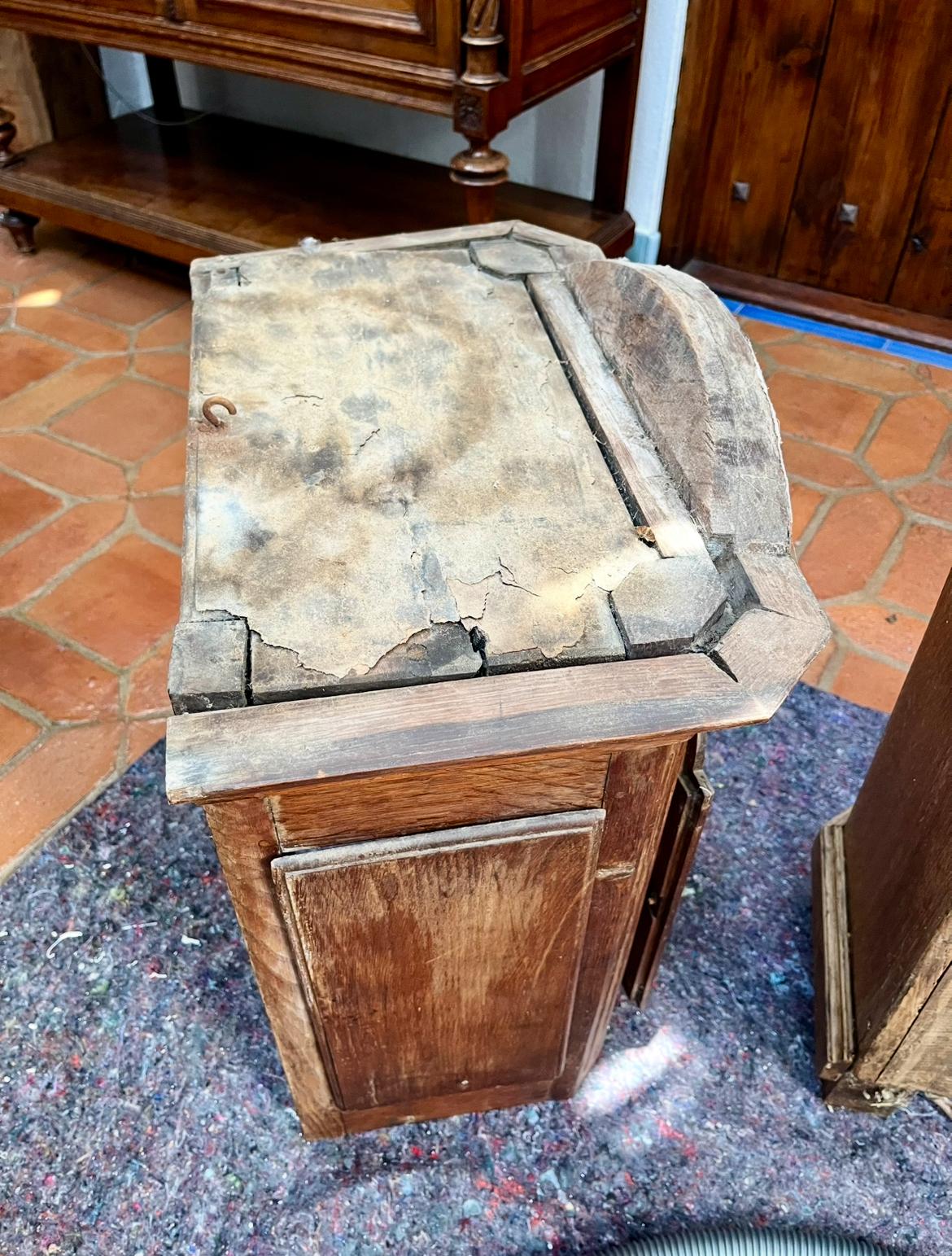
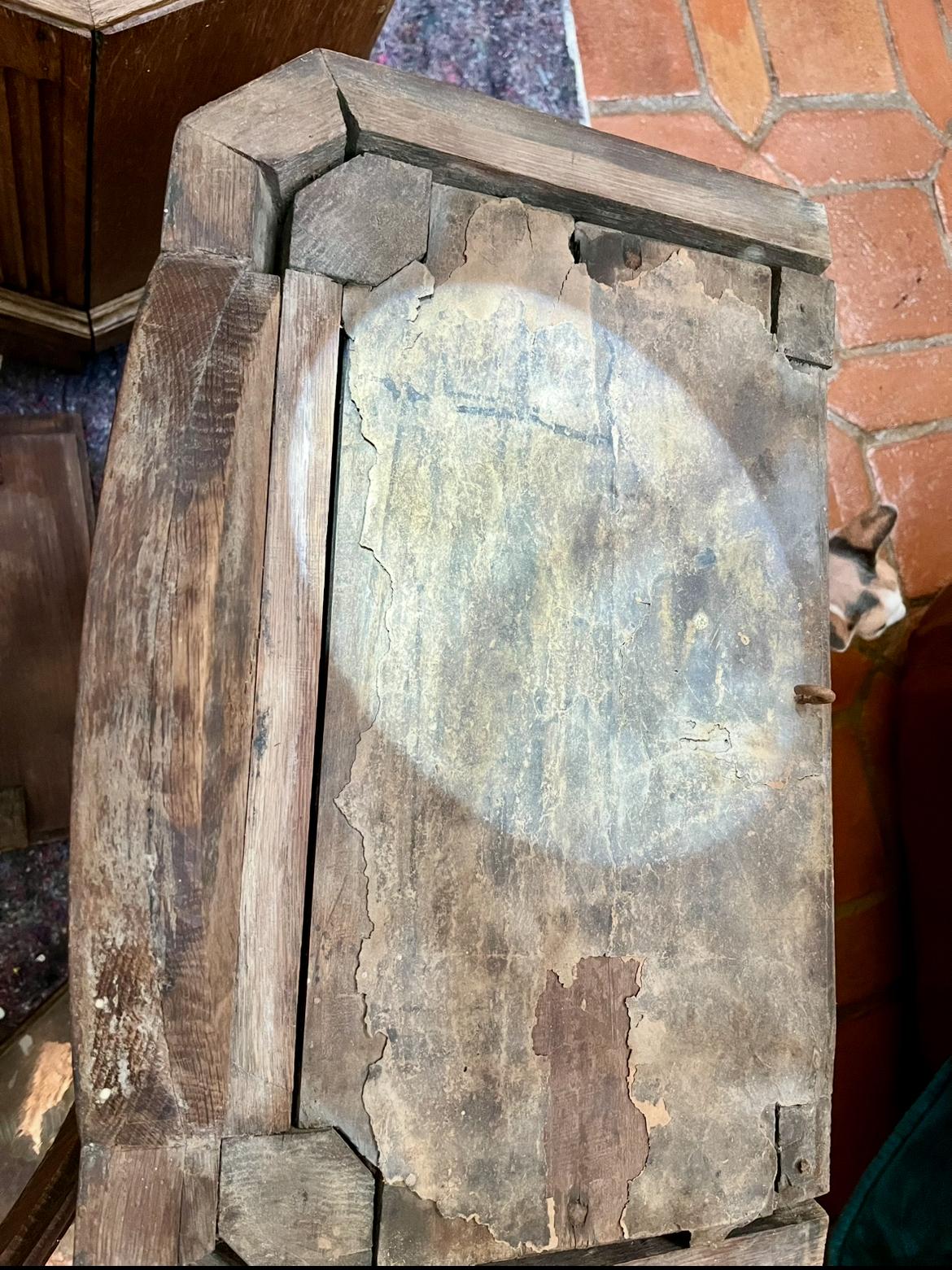
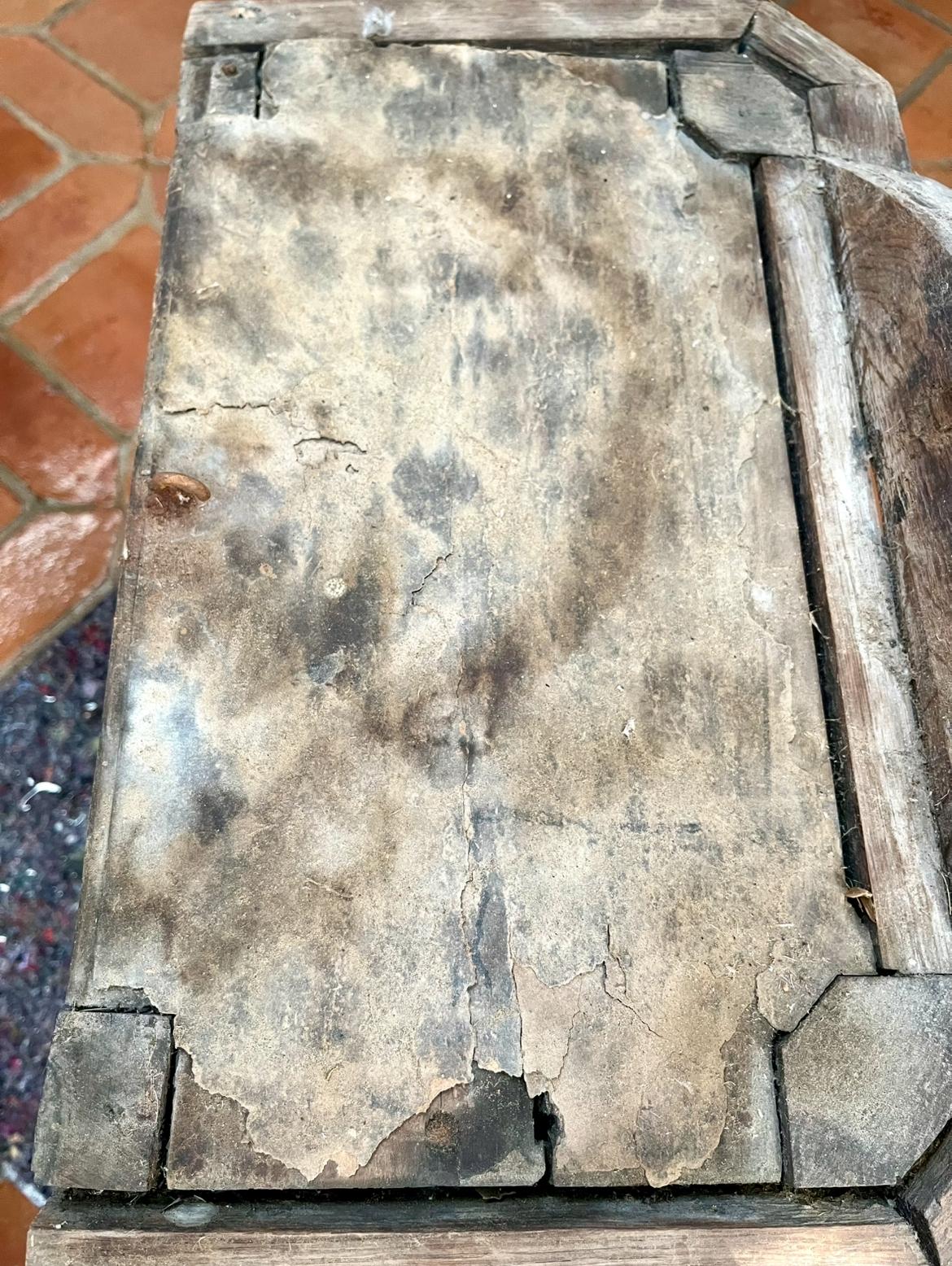
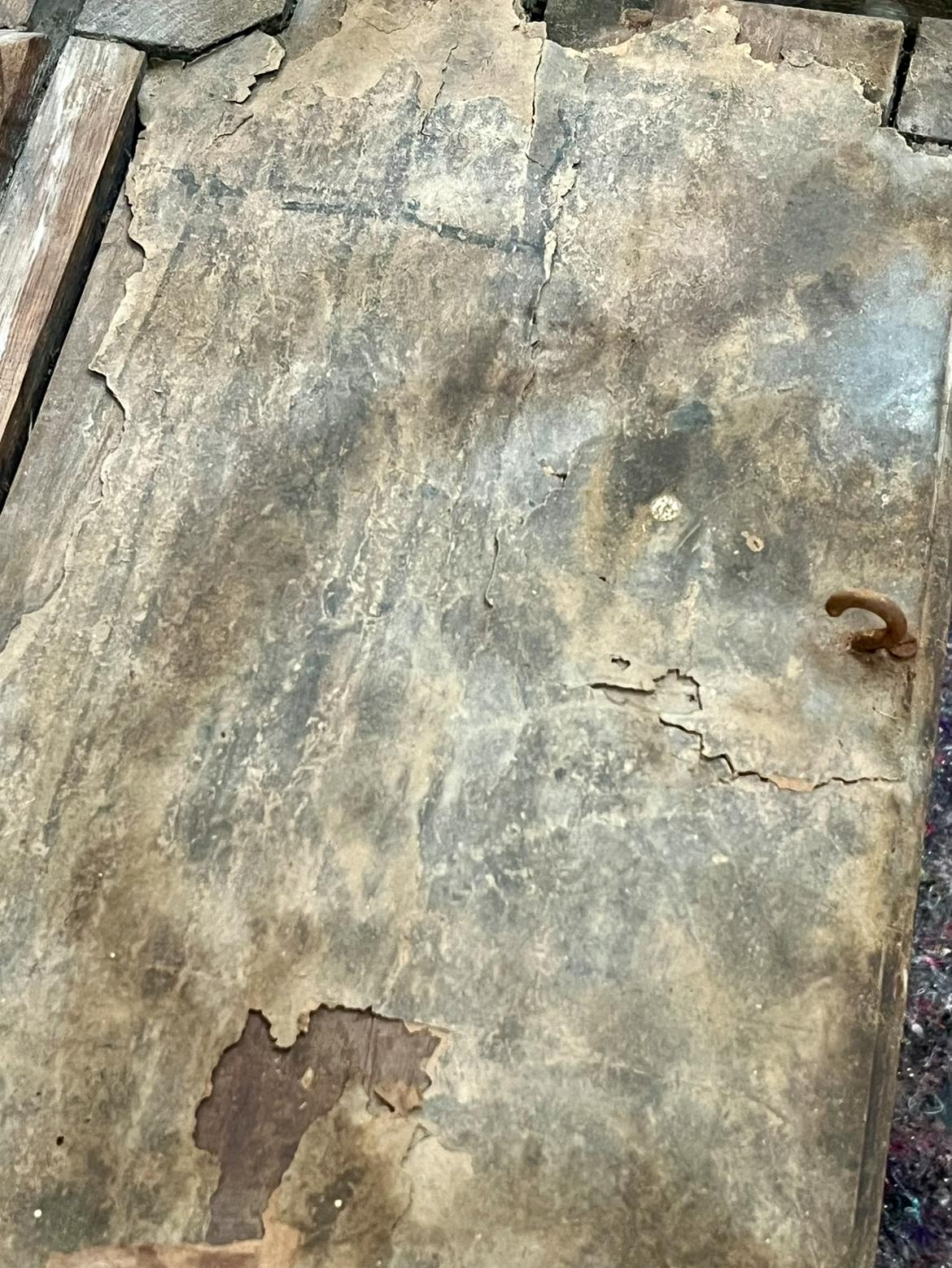
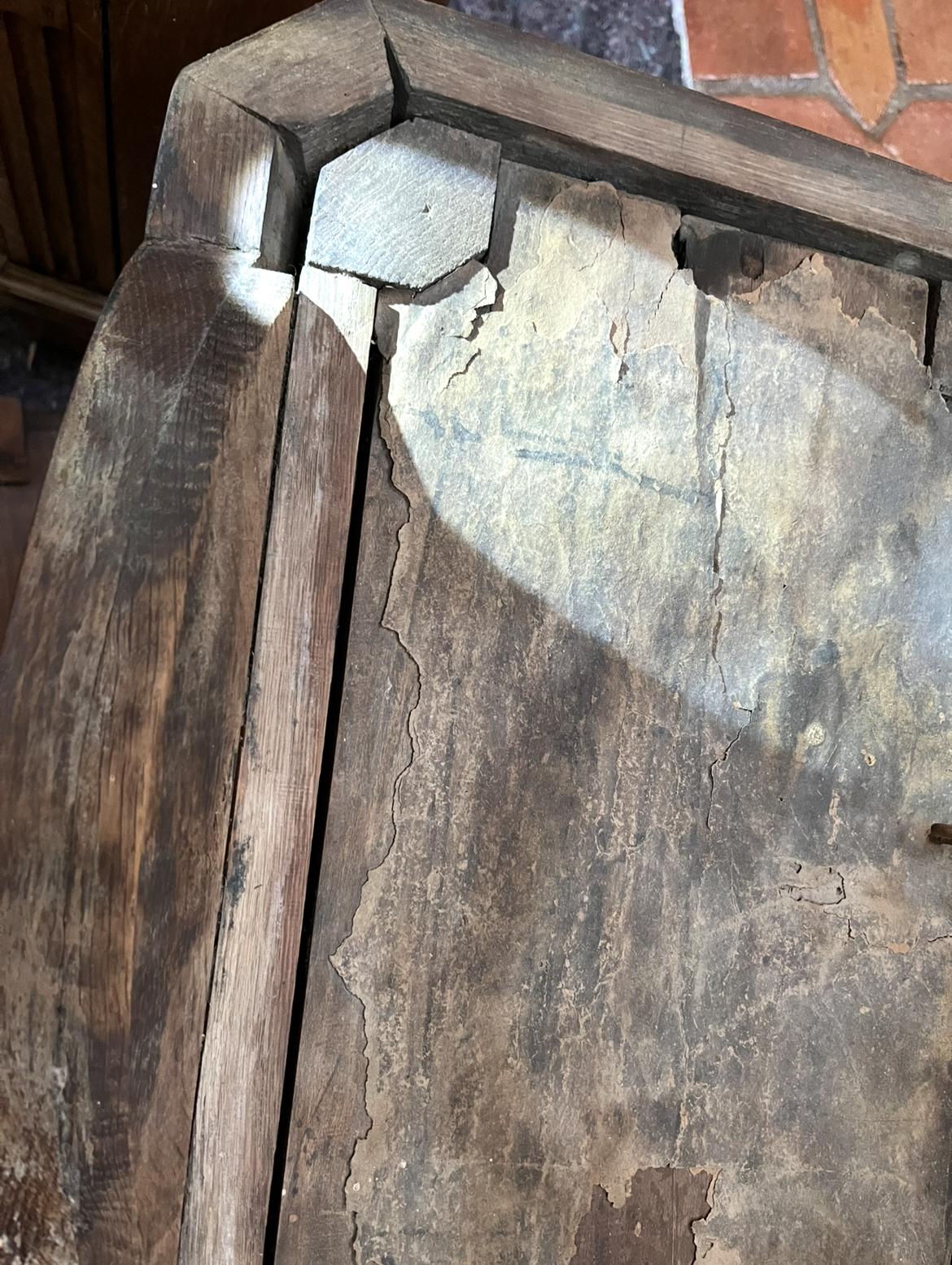
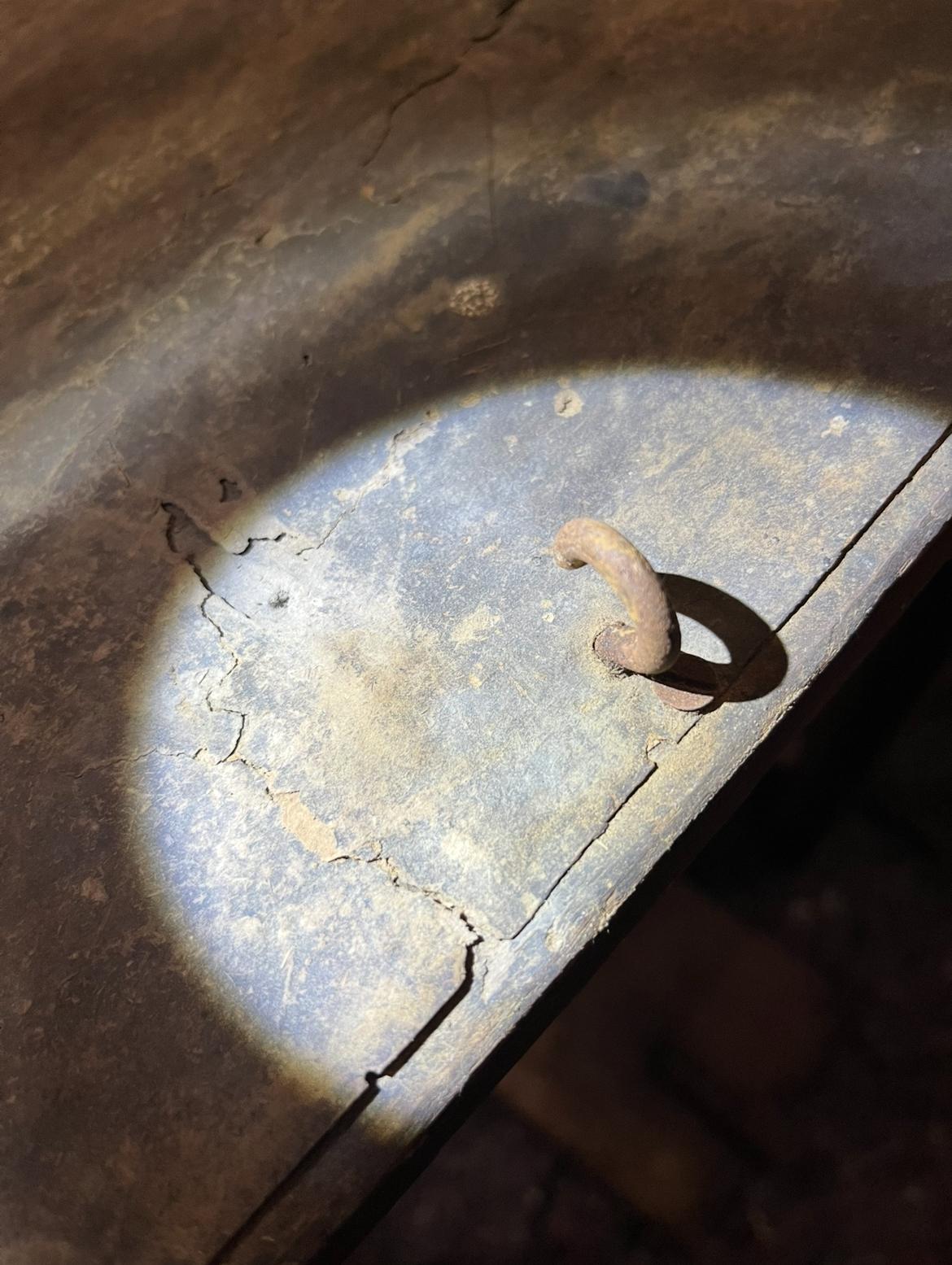
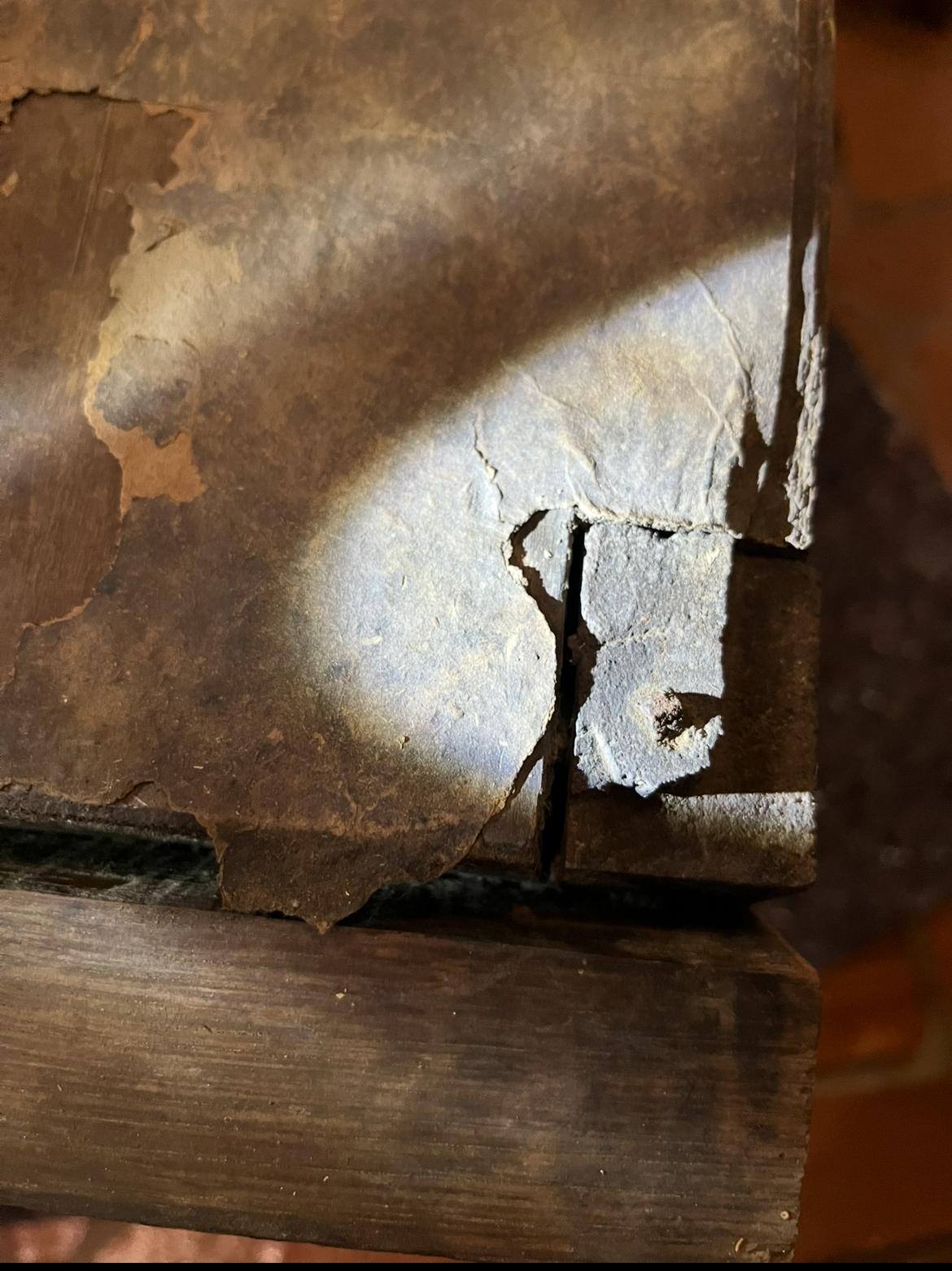
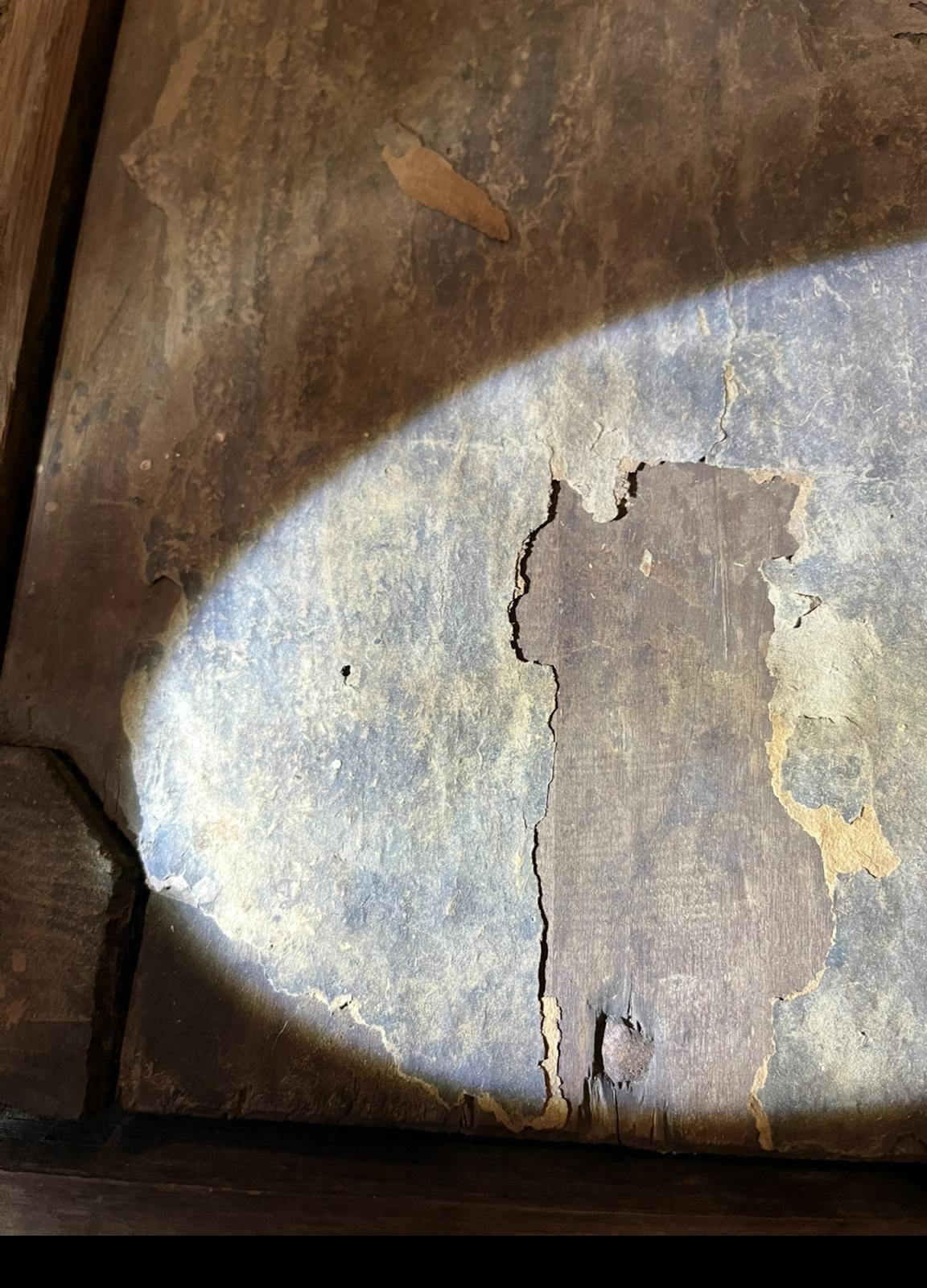
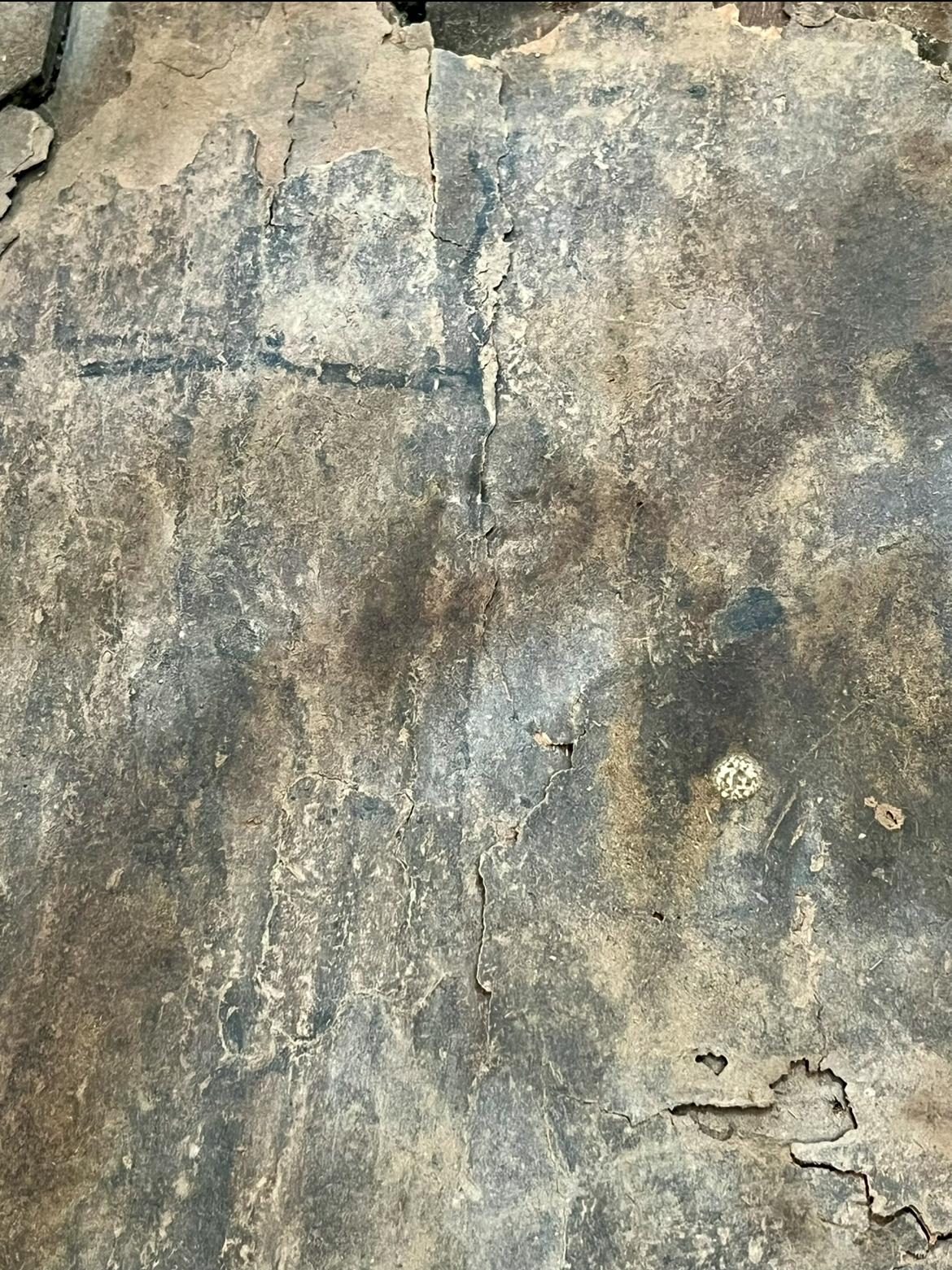
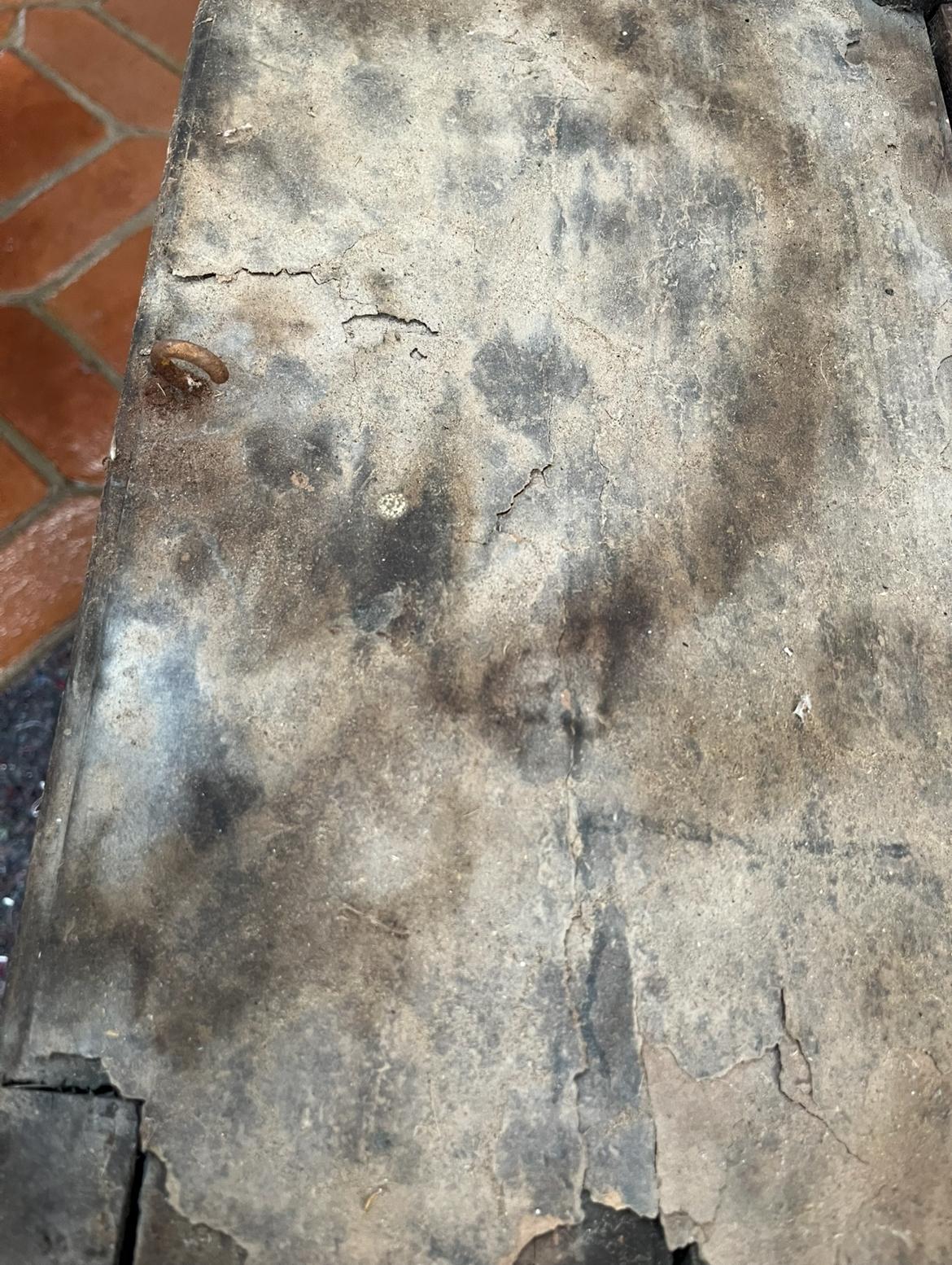
Why did old-time masters paper over the roof of a clock in layers? The answer lies in harsh Baroque-era practicality:
- A dust damper: a clock’s movement — its brass “brain” — is extremely sensitive to falling micro-particles. There was always an attic or ceiling beams above the clock, shedding limewash powder, wood dust, and fireplace soot. The paper acted as a sealed umbrella-shield.
- Shrinkage compensation: the solid oak of the hood’s roof underwent enormous temperature swings from the rising heat. The boards would inevitably dry out and shrink. Paper glued on in several layers stretched along with the wood, holding the structure together as one piece and keeping drafts from disturbing the pendulum’s swing.
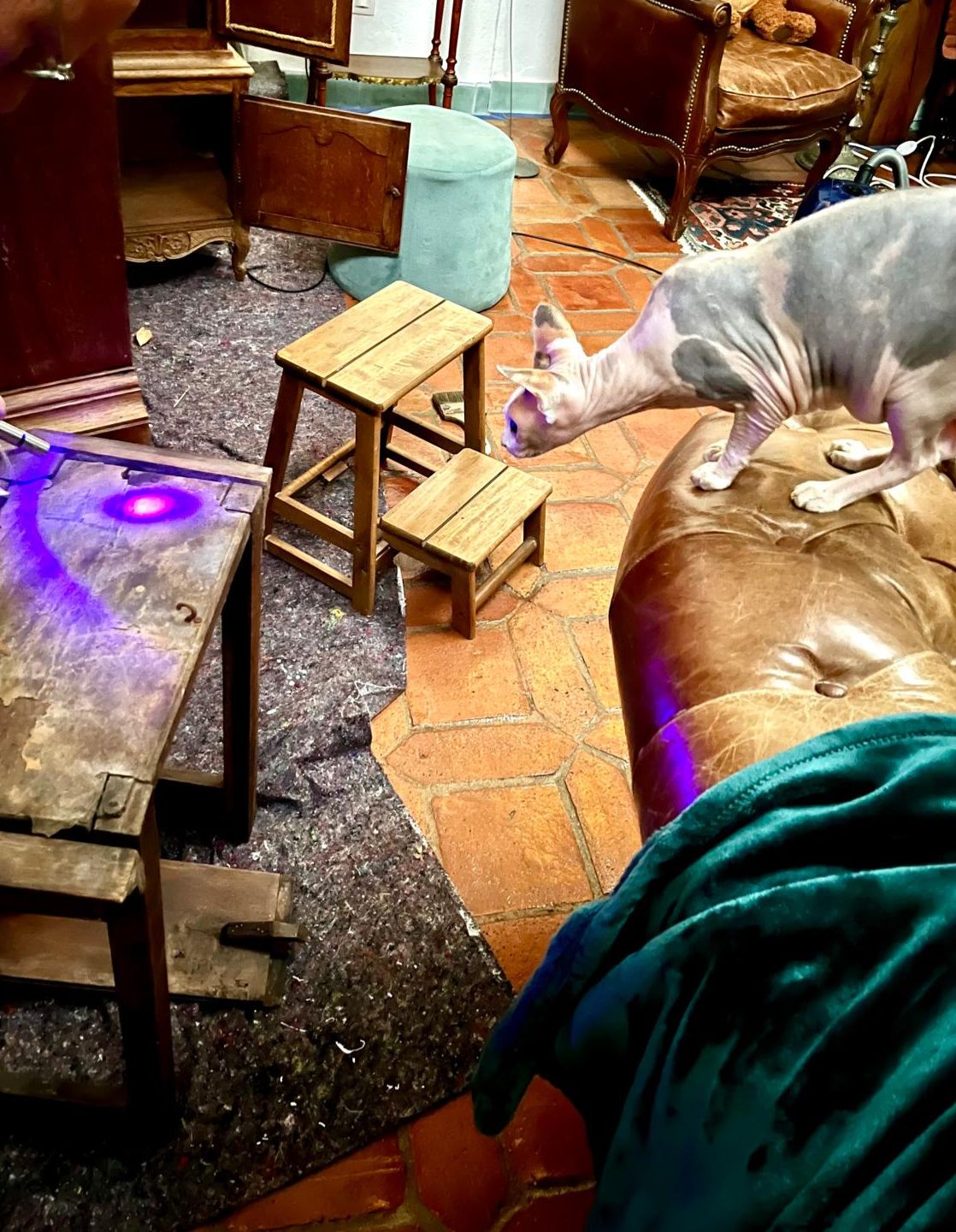
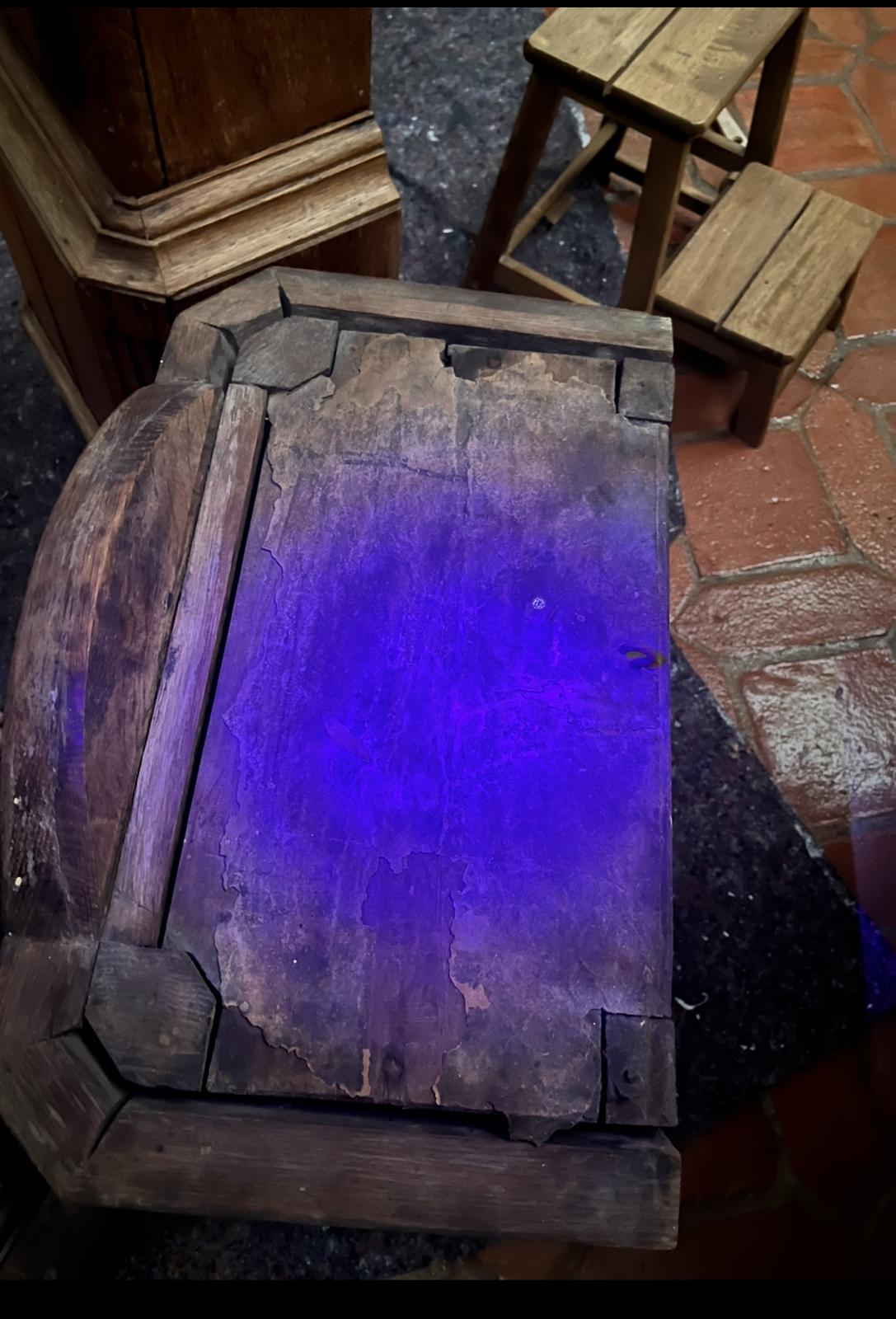
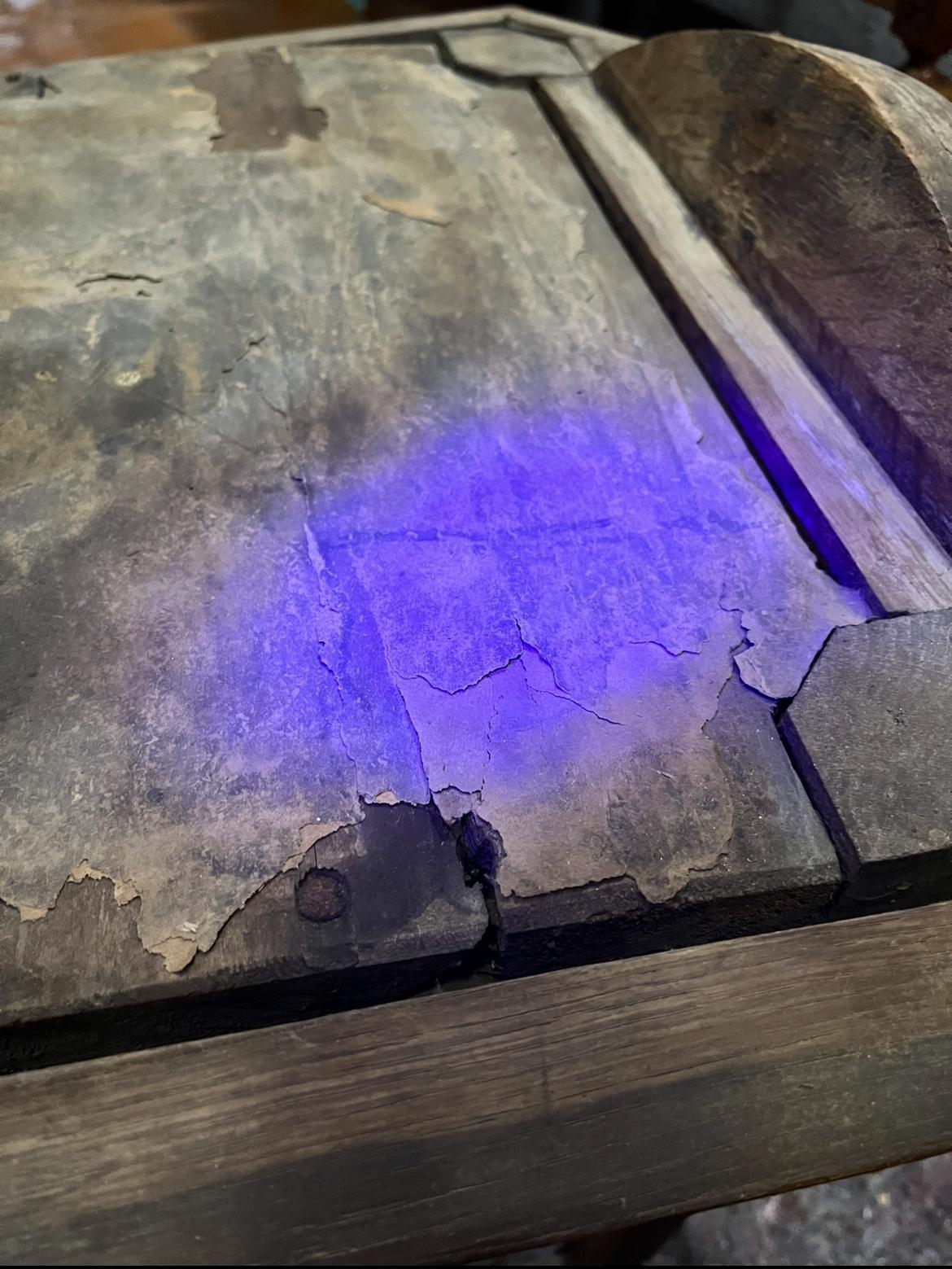
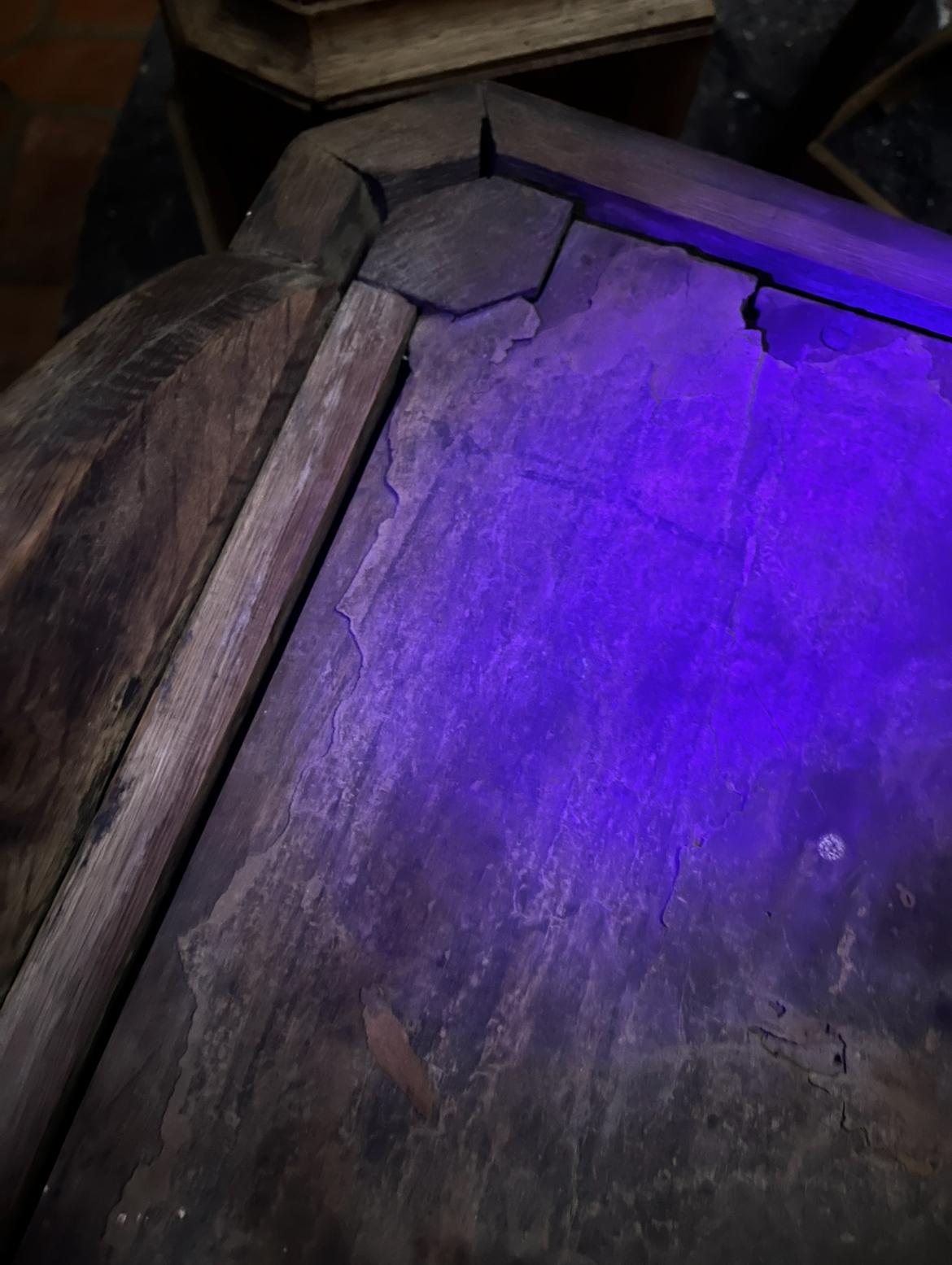
Studying this paper shell under an ultraviolet flashlight beam, we found a hidden structure of original animal (bone) glue and rag-fiber texture. That settled it for good: the old layer must never be removed. This very discovery became the foundation of our most delicate conservation operation yet — where, using a two-cc syringe and a curved Dexter blade, we meticulously worked a new, sturdy kraft-paper underlayer in directly beneath the original parchment, keeping the century-old forged hook exactly in its rightful historical place!