12 October 2026
Secrets of Hallmarks and TimePart 3. The Genetic Code of Restoration: How Engineering Intuition Echoed Baroque Mechanics
Part 3. The Genetic Code of Restoration: How Engineering Intuition Echoed Baroque Mechanics
In the practice of antique conservation there are moments that border on pure mysticism and force you to rethink the laws of craft continuity. While working on the hood of a Paulissen 1774 floor clock at our workshop, a unique technical phenomenon occurred — one we’re obligated to record as its own chapter of research.
The scientific phenomenon of this piece: can a lost 250-year-old locking assembly be recreated with no blueprints, no prototypes, no archival sketches — relying purely on the laws of material strength, material logic, and ergonomics? Our experience proved: not only is it possible, but the result can deliver 100% historical accuracy.
A chronicle of blind design
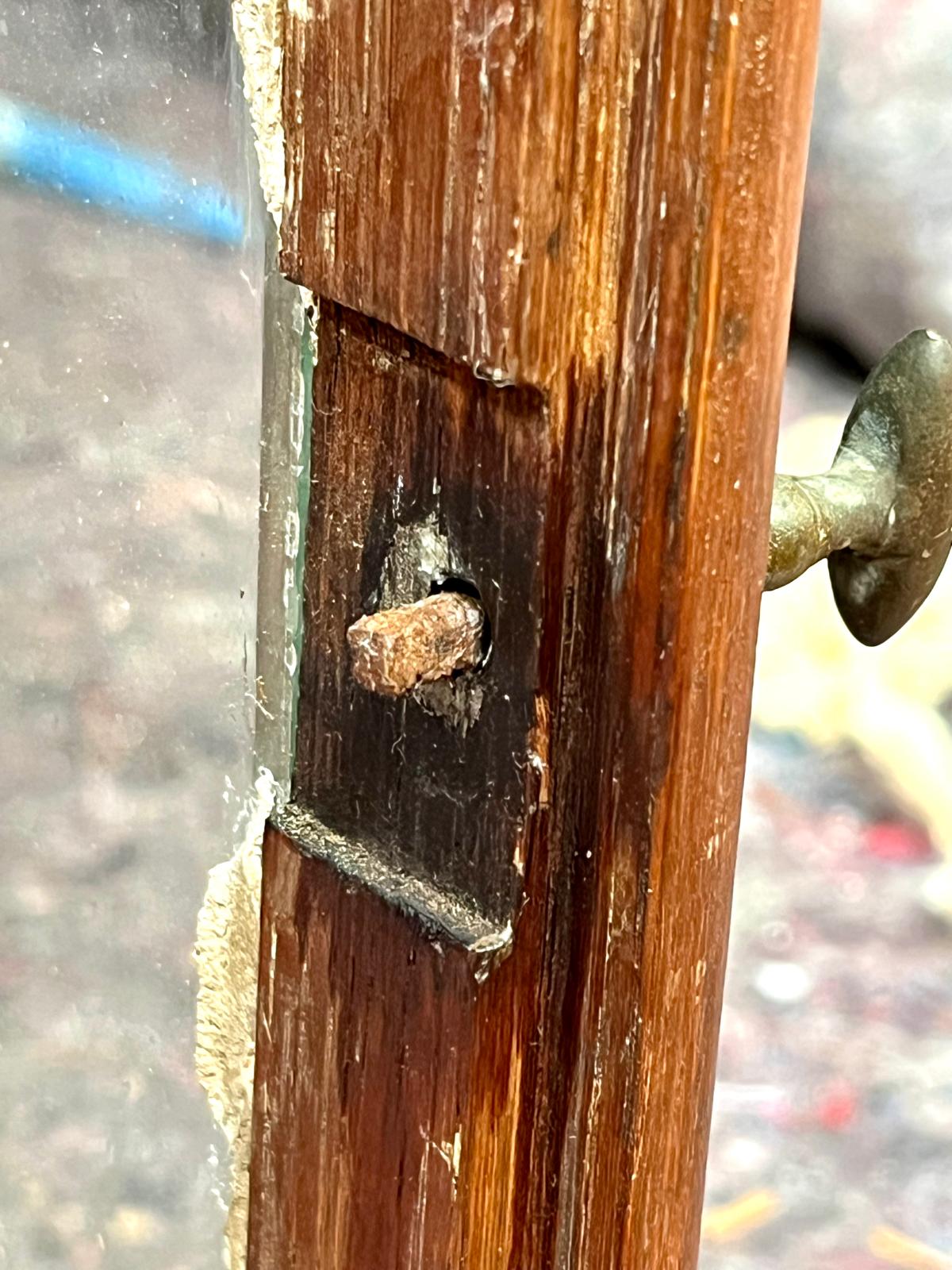
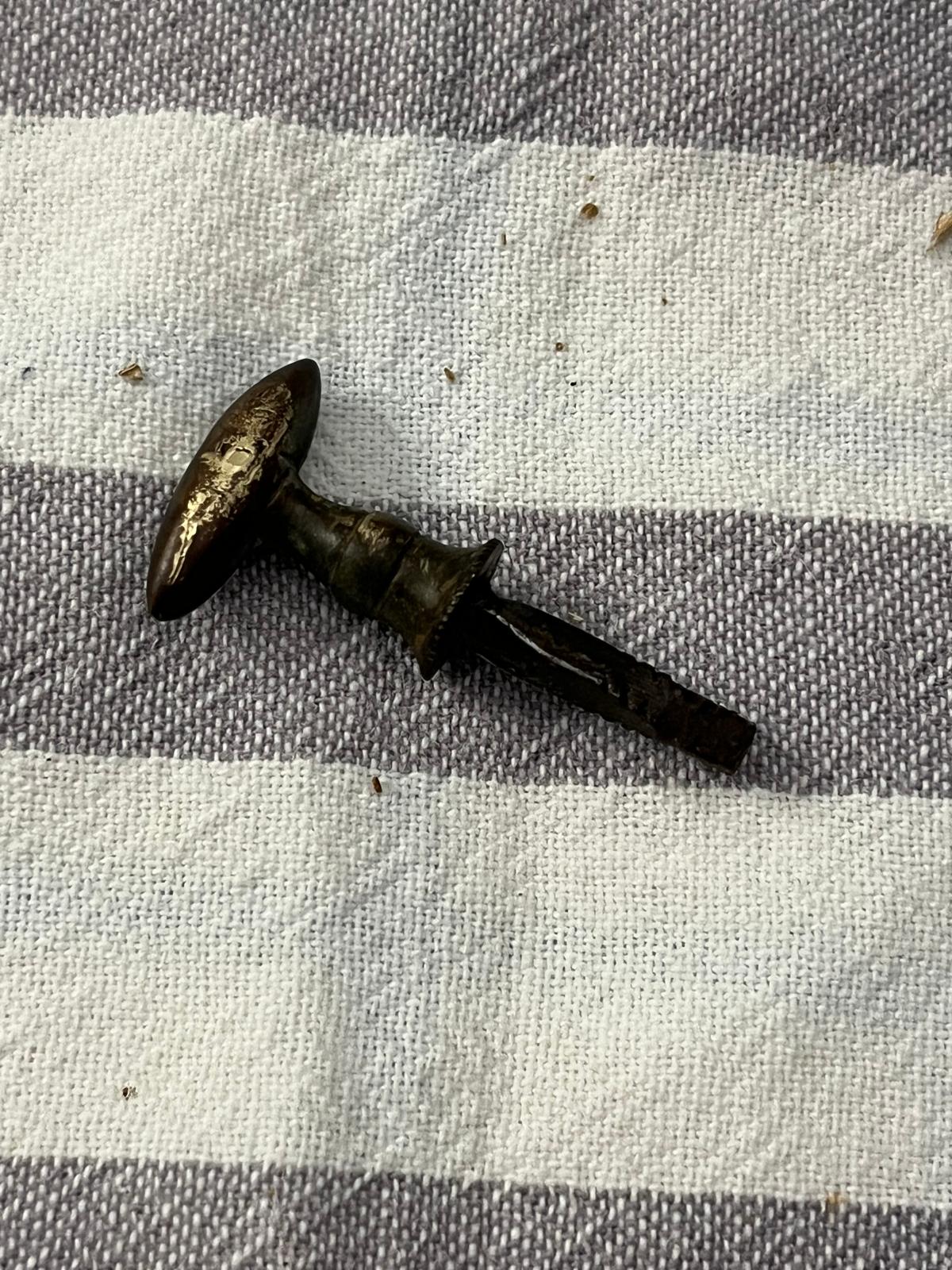
A reminder of where we started: the original internal locking tongue of the hood door had been lost beyond recovery. All that remained in the workshop’s bare interior was a forged, faceted pin — jammed in its frame, belonging to the outer brass mushroom-handle — and an empty rectangular socket cut into the dry black walnut of the frame.
With no authentic sample to look at (access to the museum catalogues of the Liège school was closed to us), my husband — our technical director — and I began designing the assembly from a blank page, guided purely by dry engineering logic:
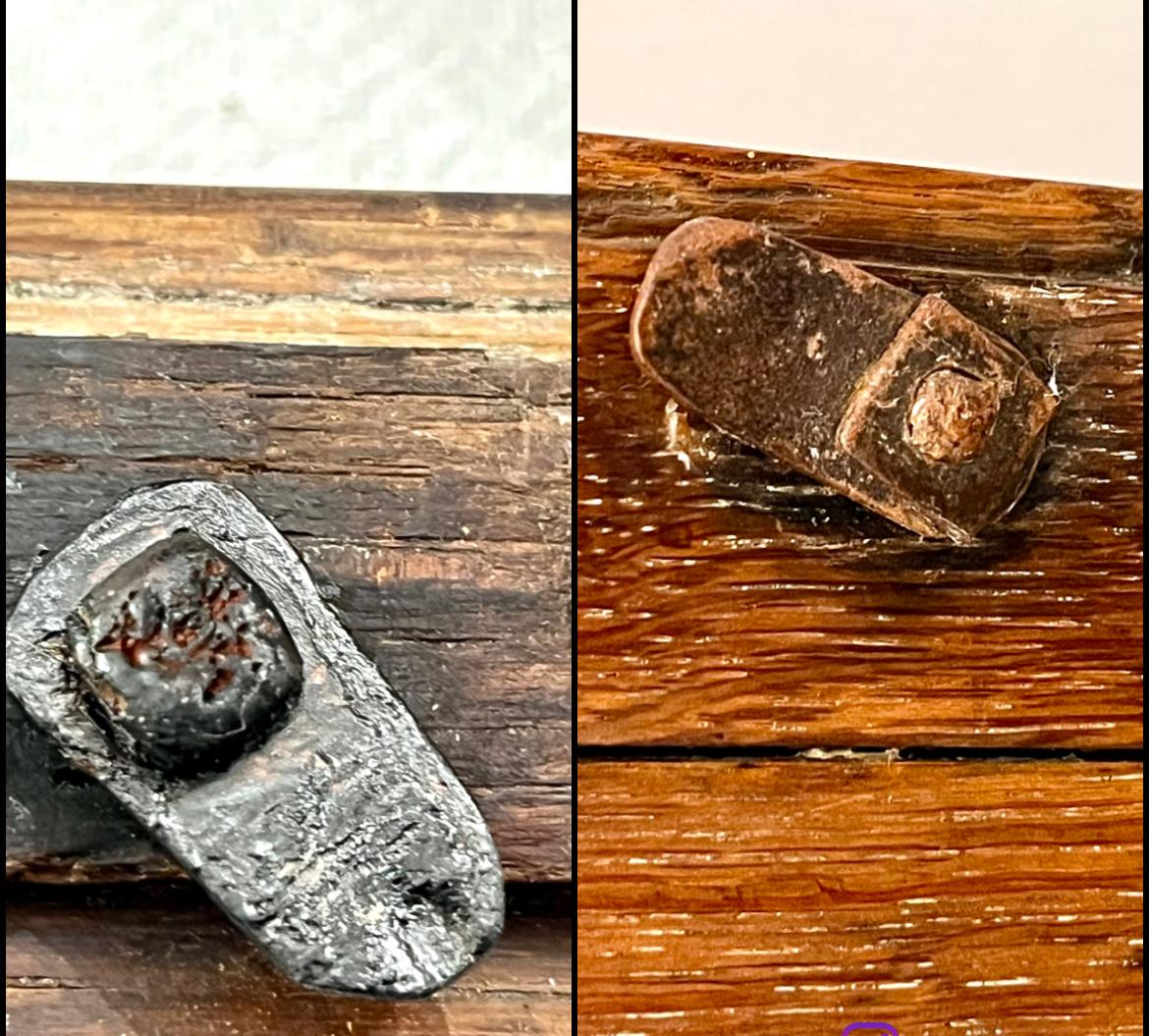
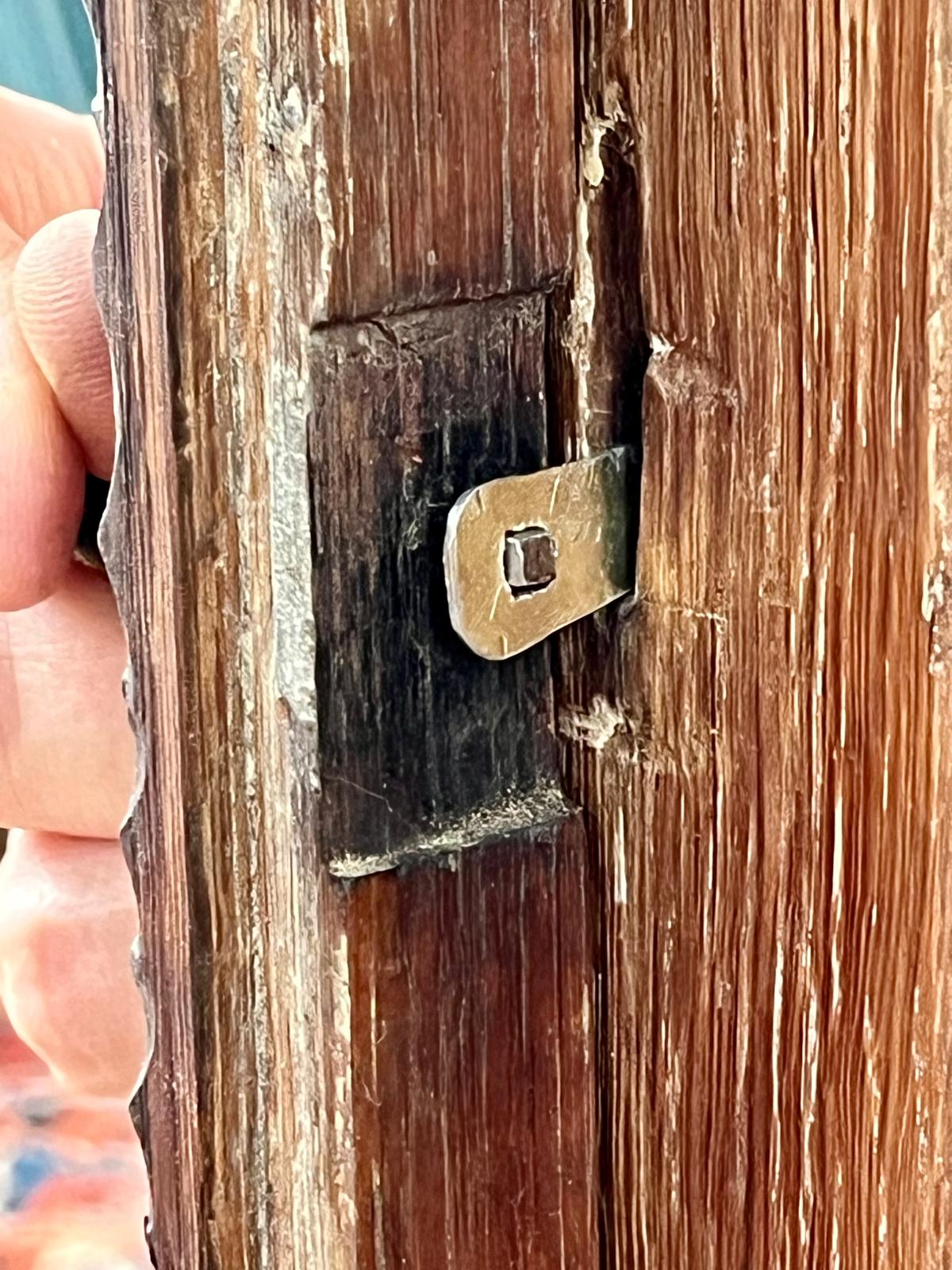
- Load-distribution geometry: so the tongue would seat cleanly into the case’s slot, not abrade the centuries-old oak binding, and have no play when turning, the central round bore of the modern steel mounting blank was machined into a tight square, matched exactly to the facets of the forged pin.
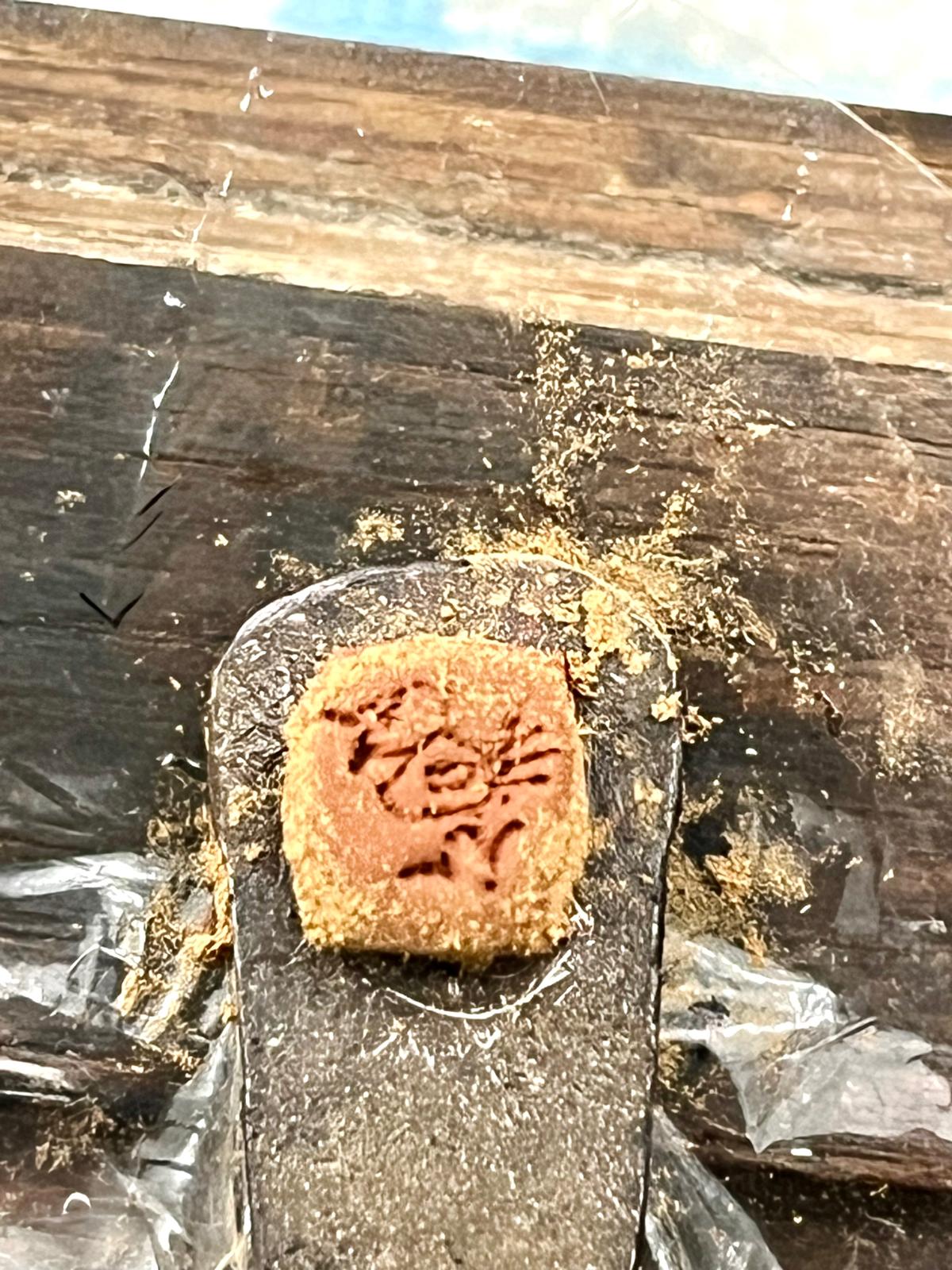
- Shaping and mass: to fix the lever onto its axle, we formed a dense structural element out of two-component cold weld (a grey-maroon epoxy putty). The part’s shape echoed a rounded square — the optimal geometry for evenly gripping the forged facets of the pin. The steel tab itself was shaped into a teardrop — the best form, from a materials-strength standpoint, for resisting torsion.
- Artistic texturing: the raw polymer was generously dusted with velvety walnut dust, hand-etched with a fine needle, and sealed with the oily, resinous Jewish bitumen Negro Betún Judaico by Mongay.
The moment of truth: comparison with the historical standard
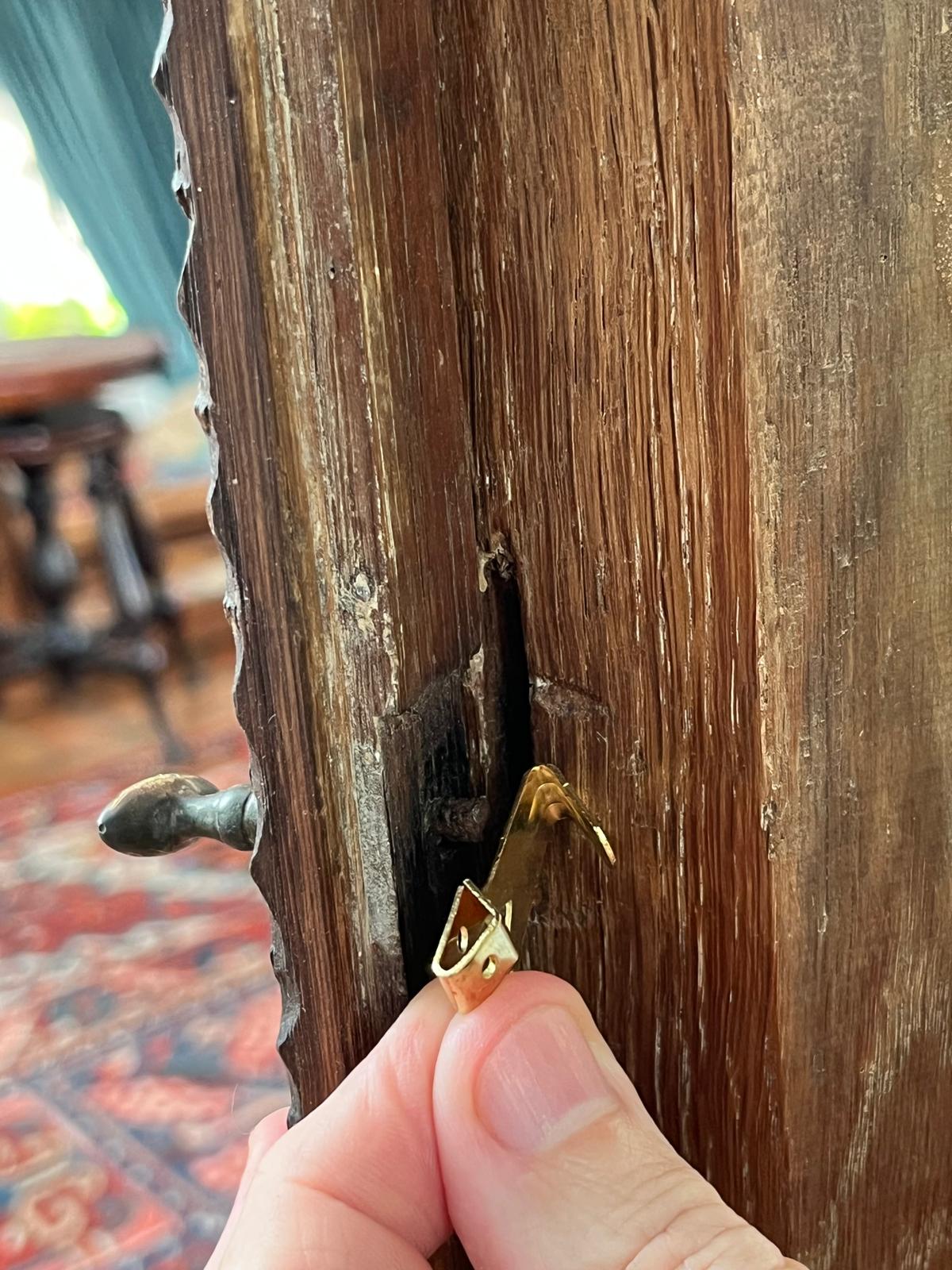
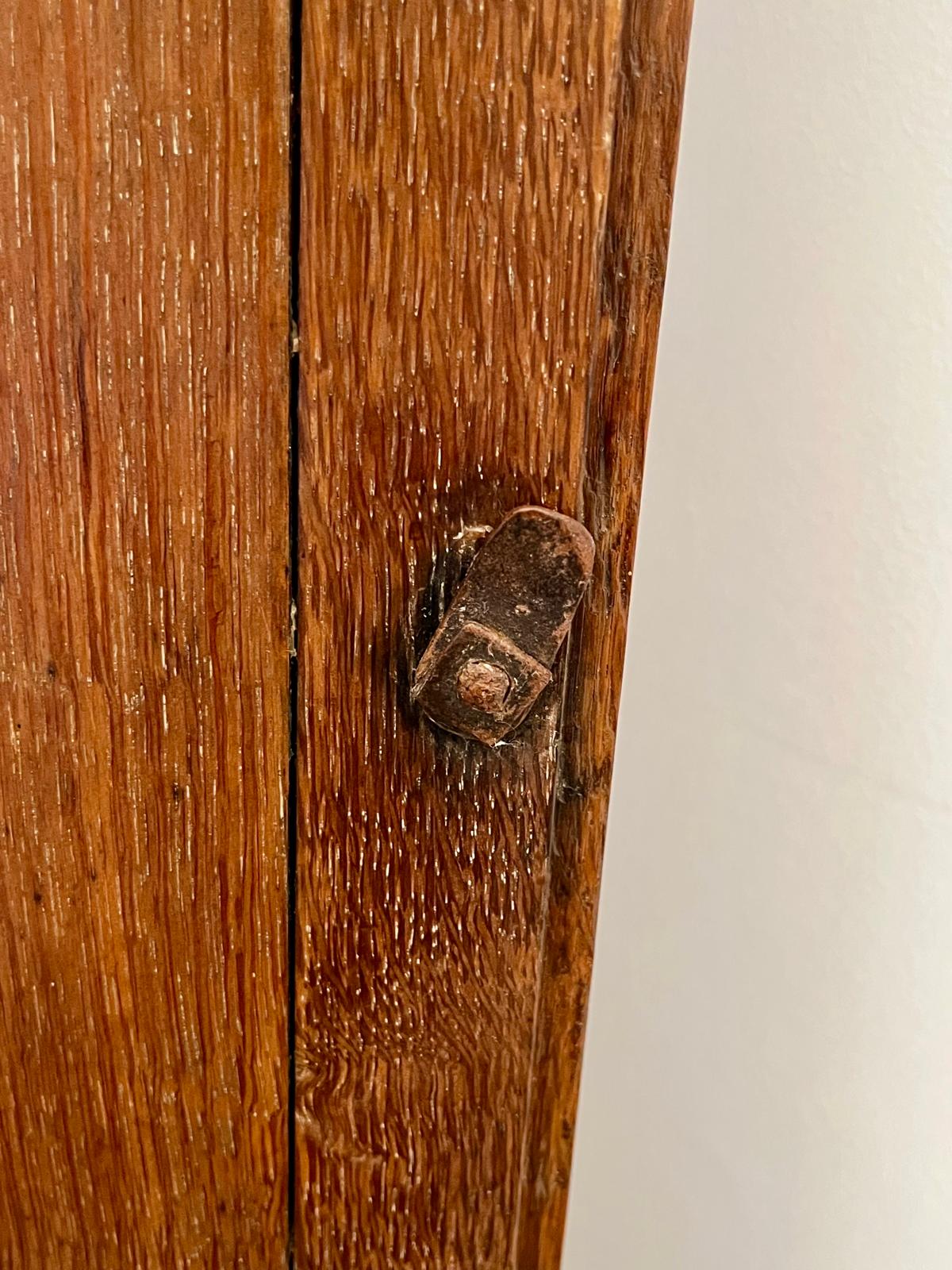
The shock came the next day, once the work was fully finished and the latch assembly was mounted on the door. While photographing other hidden parts of the case, we discovered — miraculously preserved — a matching latch on the clock’s adjacent inner panel.
We laid the two objects side by side. The result of this blind engineering exercise left our entire restoration team standing in stunned silence.
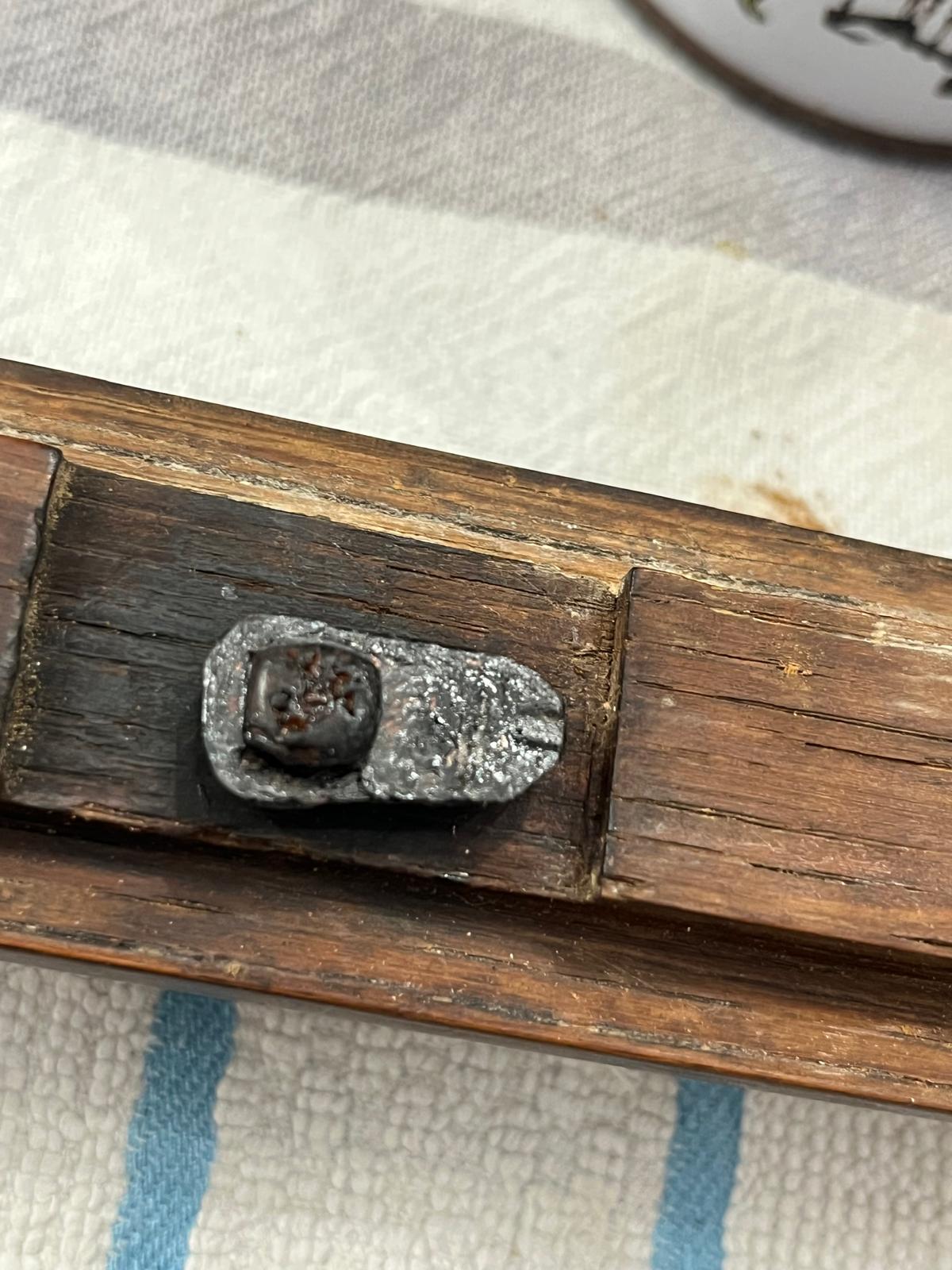
An anatomical audit of the match
The parameters matched almost perfectly — at a 99.9% level:
- Shape vector: without ever seeing the original contours, we intuitively arrived at the exact same teardrop geometry, tapering smoothly upward. The old Paulissen master, back in 1774, had arrived at the very same shape — it lets the latch glide into the wooden slot smoothly and softly, without jamming.
- Mass distribution: our molded rounded-square rivet, formed to grip the square axle, anatomically replicated — point for point — the massive forged head at the base of the historical original’s pin.
- Material illusion: the molecular mix of bitumen resins and micro-particles of walnut cellulose flawlessly recreated the porous, time-greyed texture of forged-iron scale.
🐣 A sacred symbol: the secret of the bird maker’s mark
Right at the center of our newly made cold-weld rivet sits a delicate imprint of a bird. And it’s not just an abstract decorative flourish. This silhouette is a personal logo born from a touching childhood drawing our three-year-old son once gave his mother as a gift.
Many years ago, that little bird became my own personal family trademark. It feels symbolic that this family mark, pressed into the raw compound with a needle, landed in exactly the same spot on the collar where the 18th-century master left the trace of his final hammer blow. Our latch ended up with more than a restoration passport — it got a real family soul.
Scientific conclusion
This remarkable case proves a fundamental law of materials science and mechanics: the true logic of a craft is unchanged across centuries. If a restorer doesn’t try to introduce foreign films or modern industrial surrogates (like liquid oils or glossy enamels), and instead follows strictly in the footsteps of material physics, their thinking inevitably ends up synchronized with the thinking of masters from the past.
A hand-filed square leaves no play, a teardrop shape relieves excess stress on the walnut frame, and a bitumen patina gives the metal back its historical weight. The Paulissen 1774 latch has officially returned to its native Baroque ecosystem — to work flawlessly for another hundred years.