14 October 2026
Secrets of Hallmarks and TimeWashing Away Centuries of Soot: A Flemish Renaissance, an Ammonia Explosion, and the Secrets of Oak Relief Carvings
Washing Away Centuries of Soot: A Flemish Renaissance, an Ammonia Explosion, and the Secrets of Oak Relief Carvings
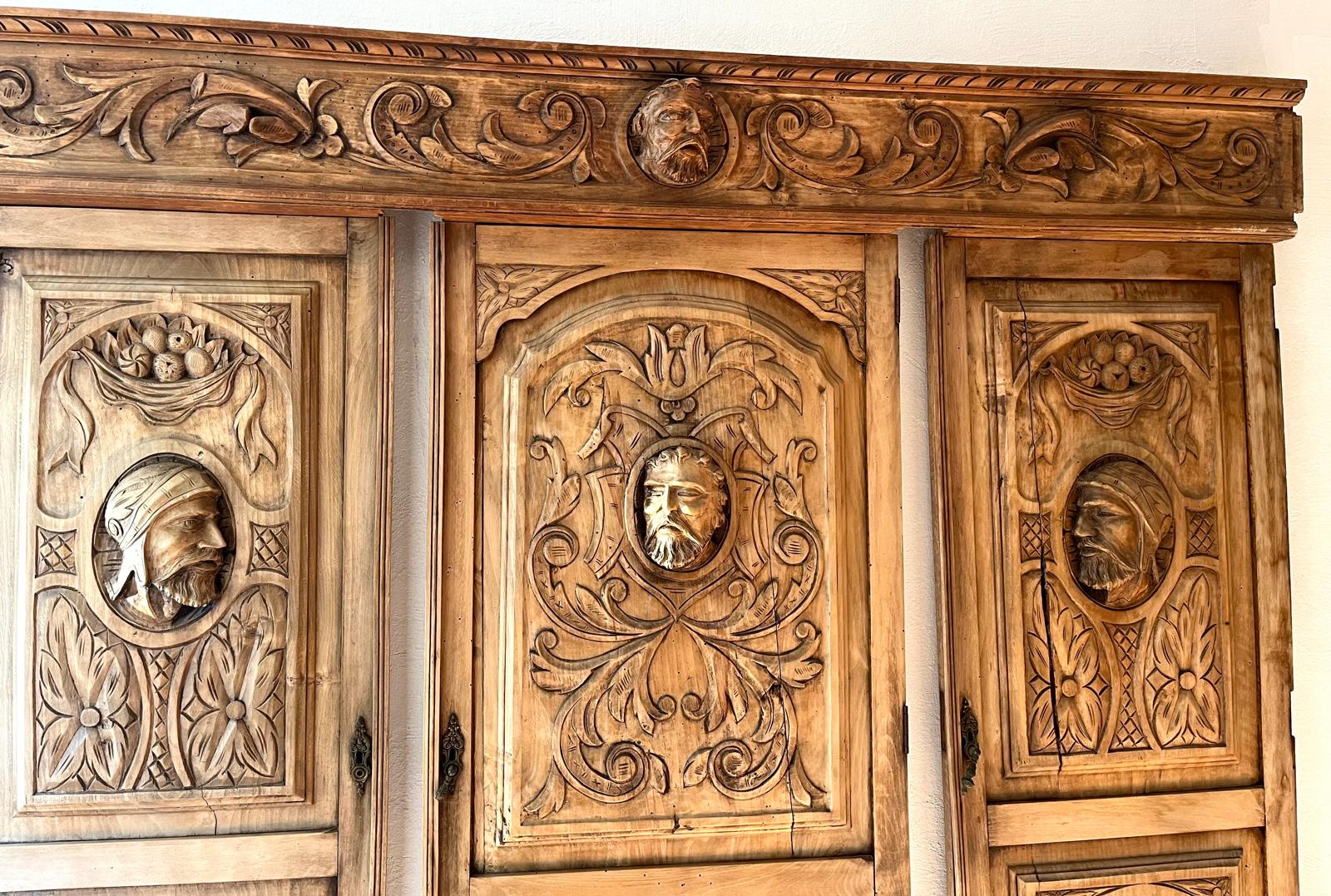
Sometimes genuine treasures from bygone eras reach us as scattered fragments, buried under layers of merciless time and grime. Our new restoration chronicle is the story of rescuing three carved oak panels and the cornice that once crowned them. They were once a single whole — a monumental Baroque cabinet — but time only spared the doors. They came to us in a dismal, alarming state: the wood was completely sealed under a dense, opaque, coal-black sulfur crust.
Below is our critical art-historical analysis and the radical but victorious chemical cleaning protocol that returned the masterpiece to its original splendor.
A reminder for readers: we still don’t claim academic expertise — we’re simply sharing hands-on, tangible experience, step-by-step techniques, and material-science secrets.
Chapter 1. Battling the sulfur shell: a chemical breakthrough
Our initial attempts to remove the black crust with classic store-bought strippers failed completely. Most industrial solvents have a pronounced alkaline or neutral pH, which proved powerless against a greasy buildup of fireplace soot, wax, and sulfur deposits baked on over centuries. A non-standard chemical weapon was needed.
We made the bold decision to use ammonia spirit (an ammonia solution). With its tremendous volatility and specific pH level, ammonia worked as the perfect molecular breaker:
- An outdoor operation: given the compound’s sharp smell, the workshop was set up outdoors, right on the grass.
- The reaction: the ammonia solution was generously applied with a stiff brush deep into the relief carving. The result exceeded every expectation: the century-old sulfur shell liquefied and bubbled within minutes, turning into a manageable emulsion.
- Drainage: the softened grime was rinsed off with a powerful jet of water straight from the garden hose, after which the panels were instantly dried with cloth and smooth microfiber to prevent the wood from warping.
The result turned out immaculate: not a single trace of sulfur remained in even the deepest undercuts of the carving. The cleaned oak was sealed with the thinnest protective layer of clear, silky glaze (lasera), which brought out its noble natural texture, and took its place of honor on the Home’s wall.
Chapter 2. A stylistic investigation: Flanders versus Spain
Once the age-old grime came off, a phenomenal piece of relief sculpture was revealed to us. A natural question arose: which national school of masters created this piece? We ran a rigorous comparative analysis between Spanish Plateresque and Flemish Mannerism.
A critical marker of this art-historical analysis:
| Anatomical feature | The Spanish Renaissance school | Our oak relief carving (Flemish school) |
|---|---|---|
| Material (wood) | Walnut (nogal), chestnut, or pine. Oak was practically never used for cabinet furniture. | Monumental, dense oak. An absolute marker of masters from Flanders, Holland, and Northern France. |
| Ornamental code | Fine, arabesque Plateresque work, heavily influenced by the Mudéjar Moorish style (geometry, filigree). | Heavy, lush fruit garlands and festoons with figs and pomegranates. A direct quote from the albums of Jan Vredeman de Vries. |
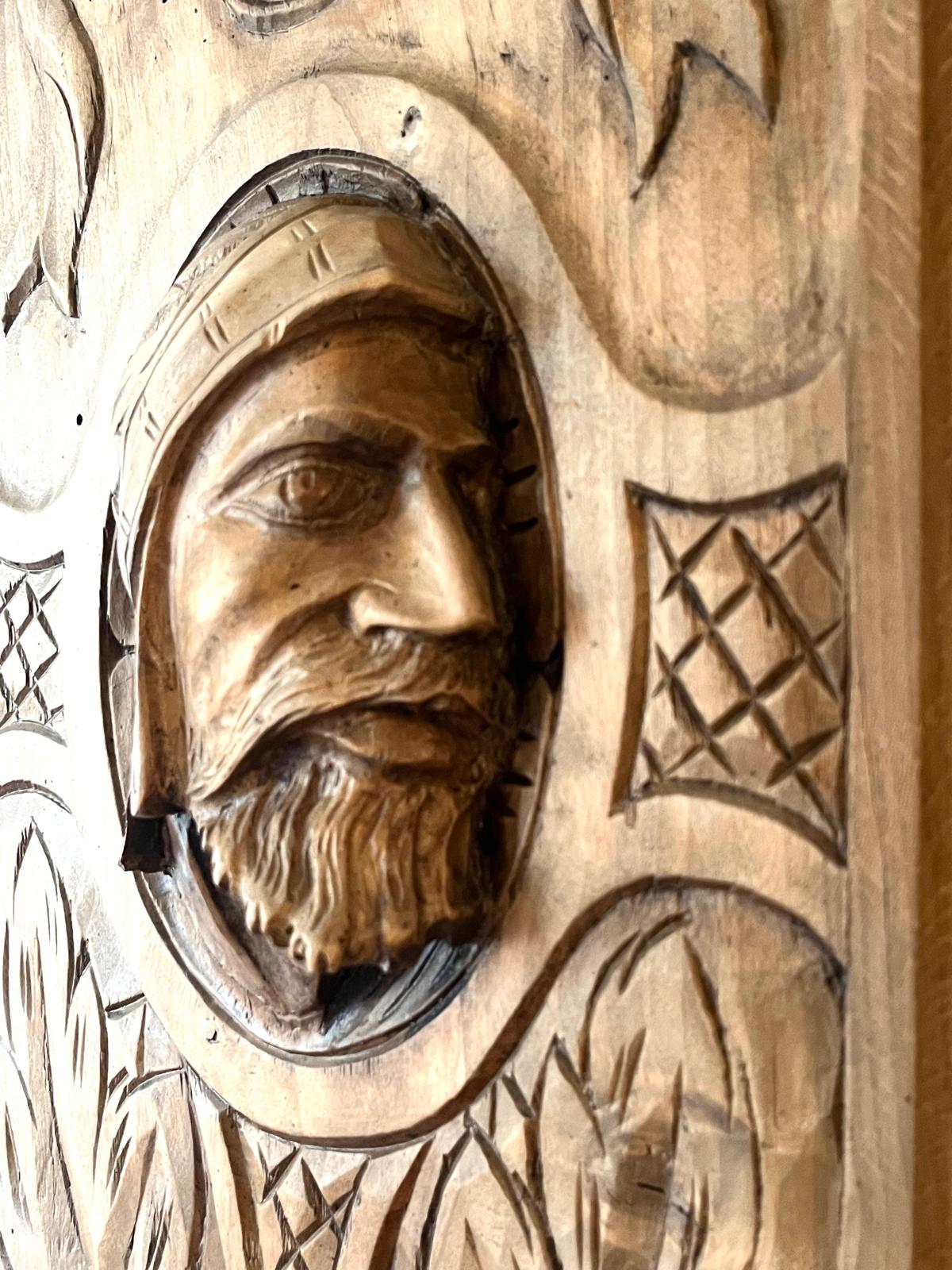
| Figures and facial types | Elongated proportions, the highest expression, a dramatic, almost religious intensity. | Calm, burgher-like grandeur. Dense beard strands, classic straight noses, a Teutonic severity of profile. |
Chapter 3. The anatomy of the reliefs: the narrative
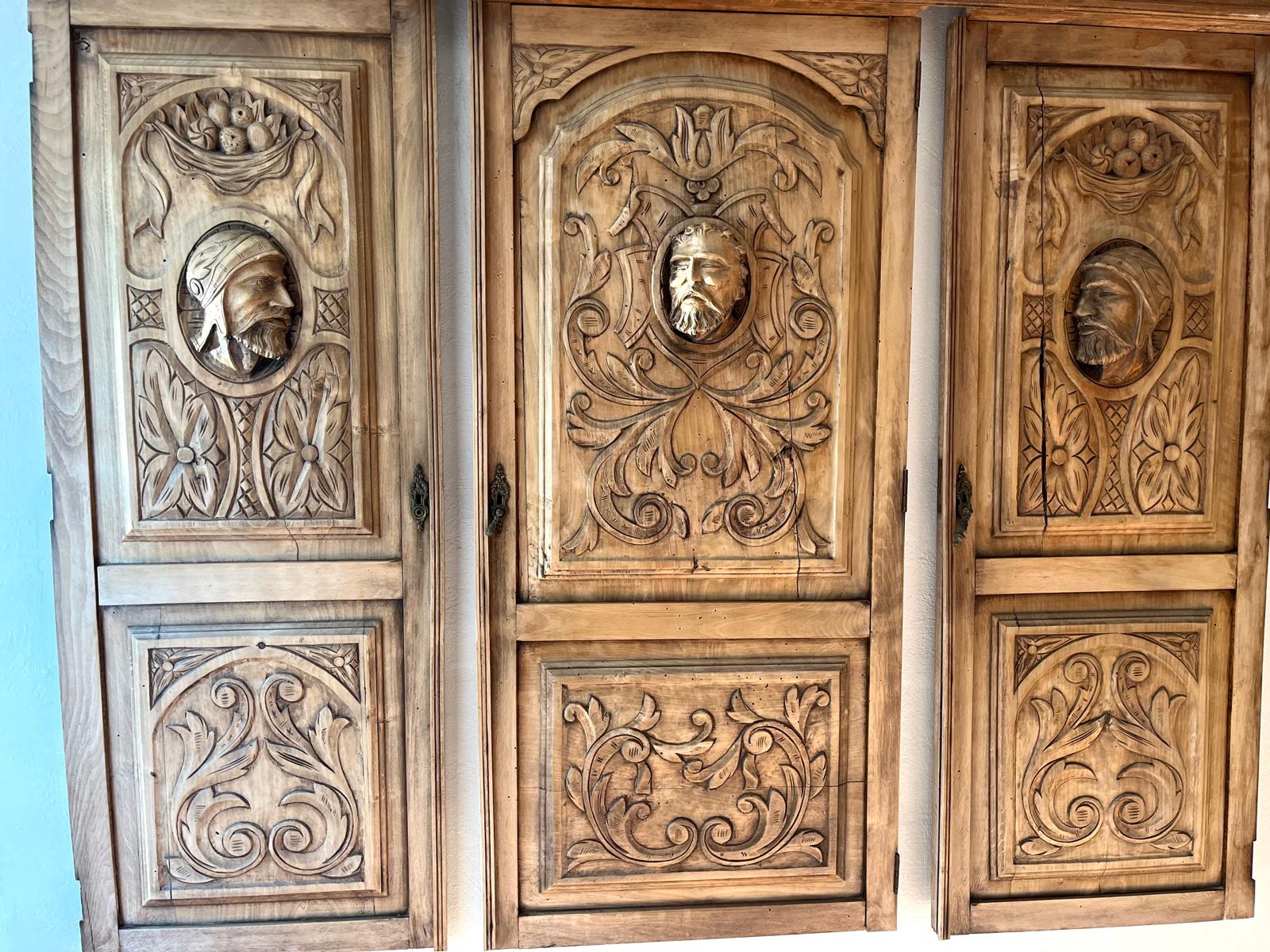
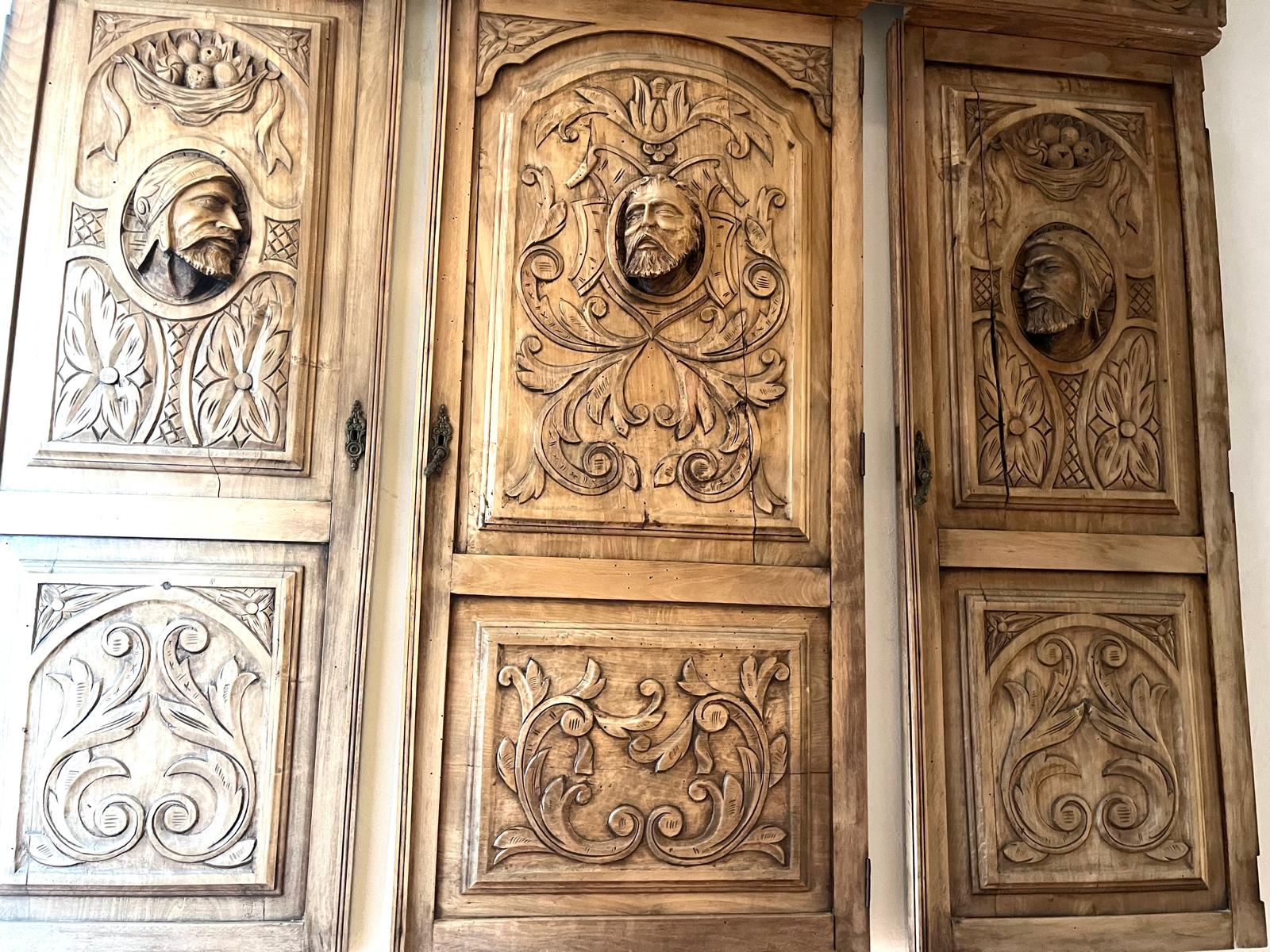
The panels’ architecture follows the classic canons of a three-part Baroque facade:
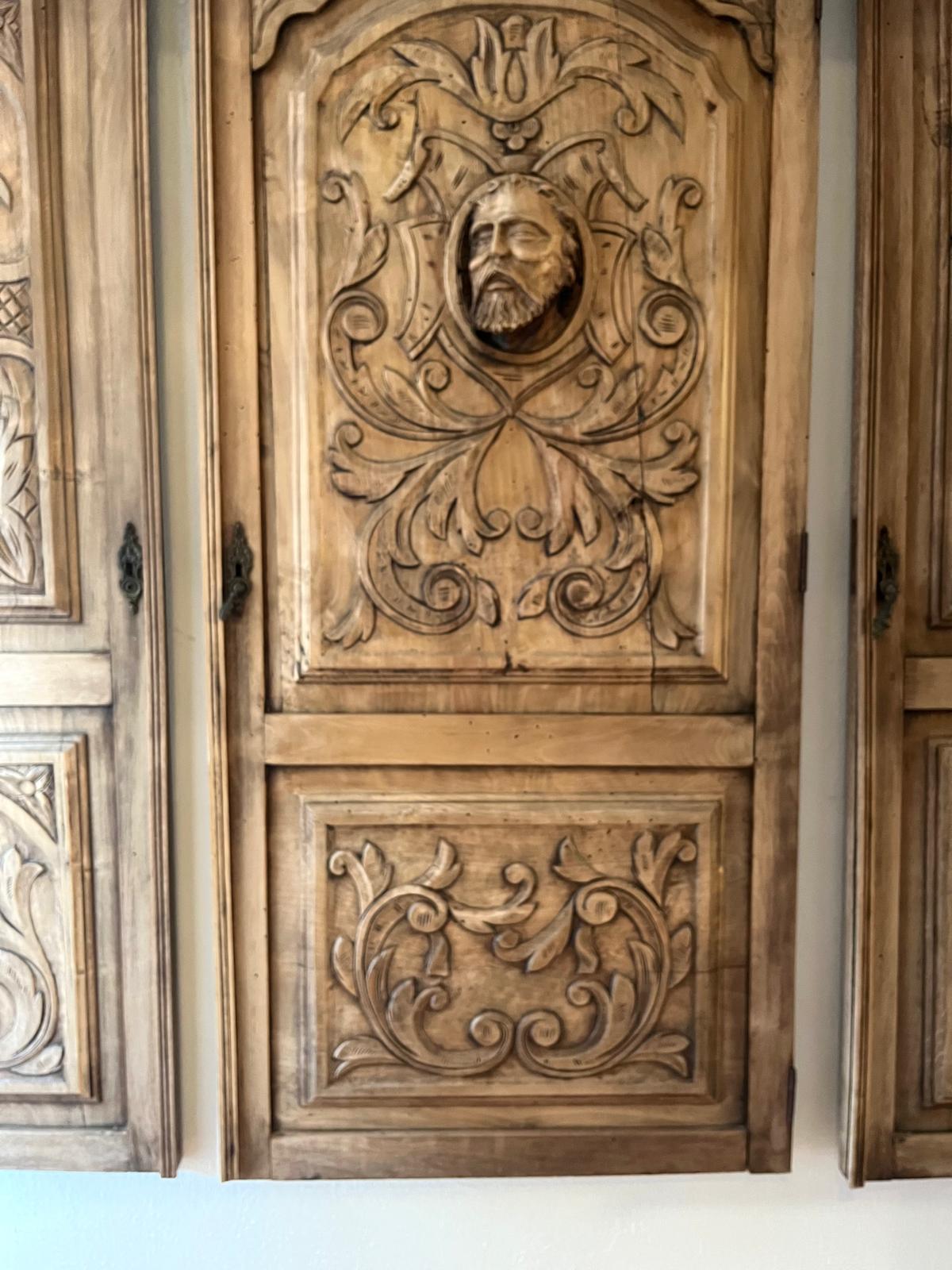
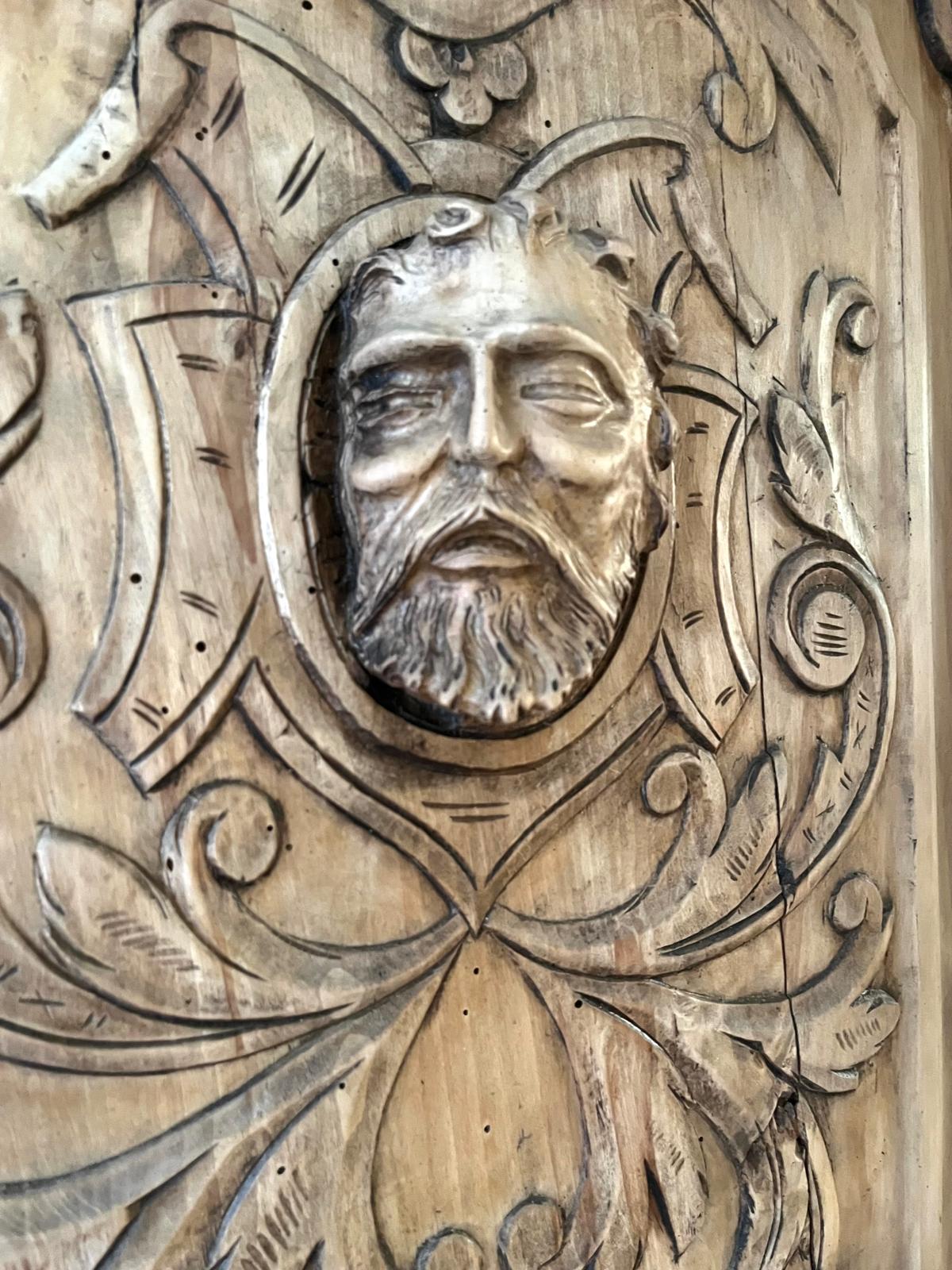
- The central mascaron: this panel is adorned with a deep relief of a man’s face framed by lush acanthus leaves. The extremely fine rendering of the expression, forehead creases, and strands of hair speaks to the hand of an outstanding master carver.
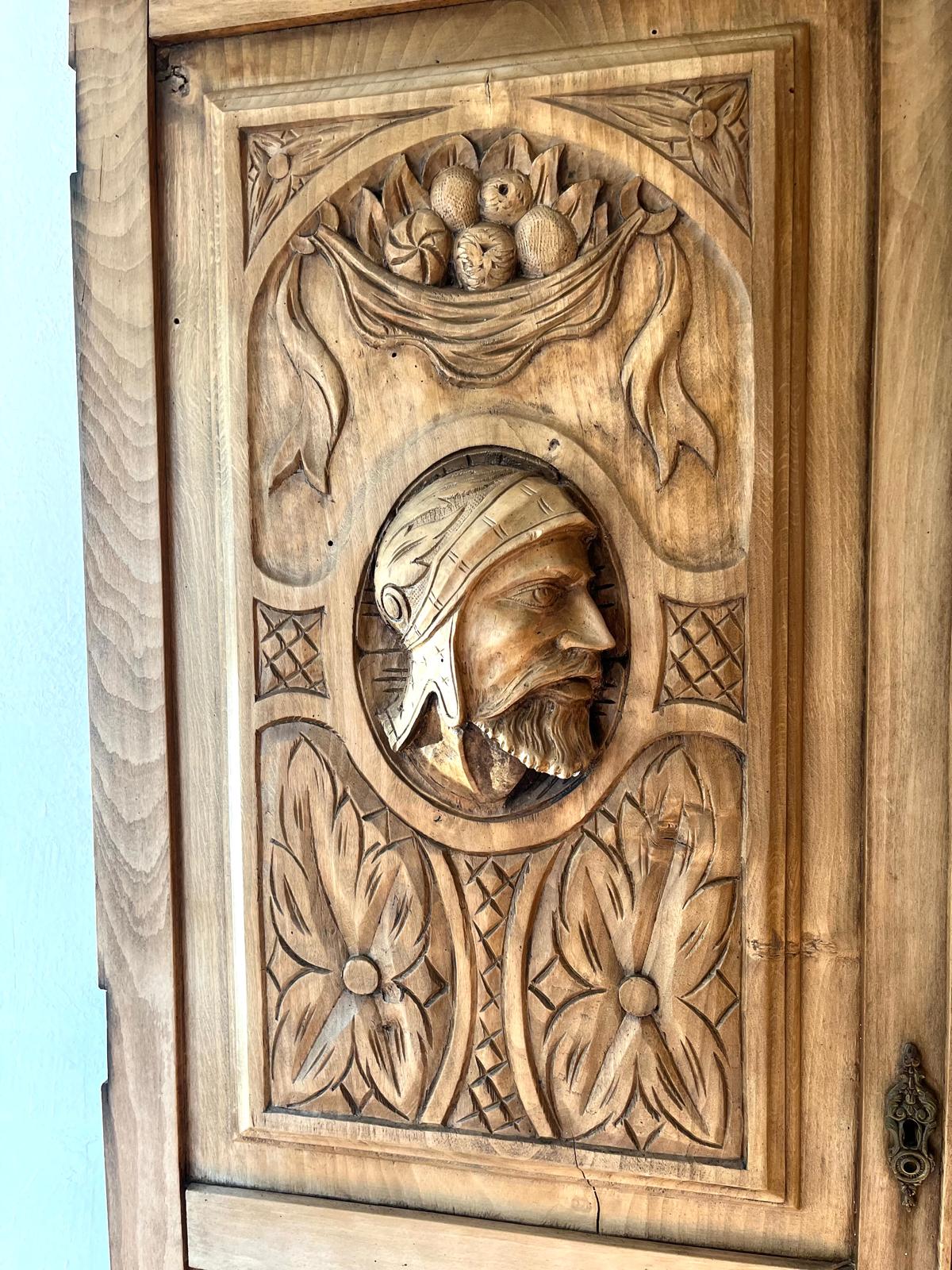
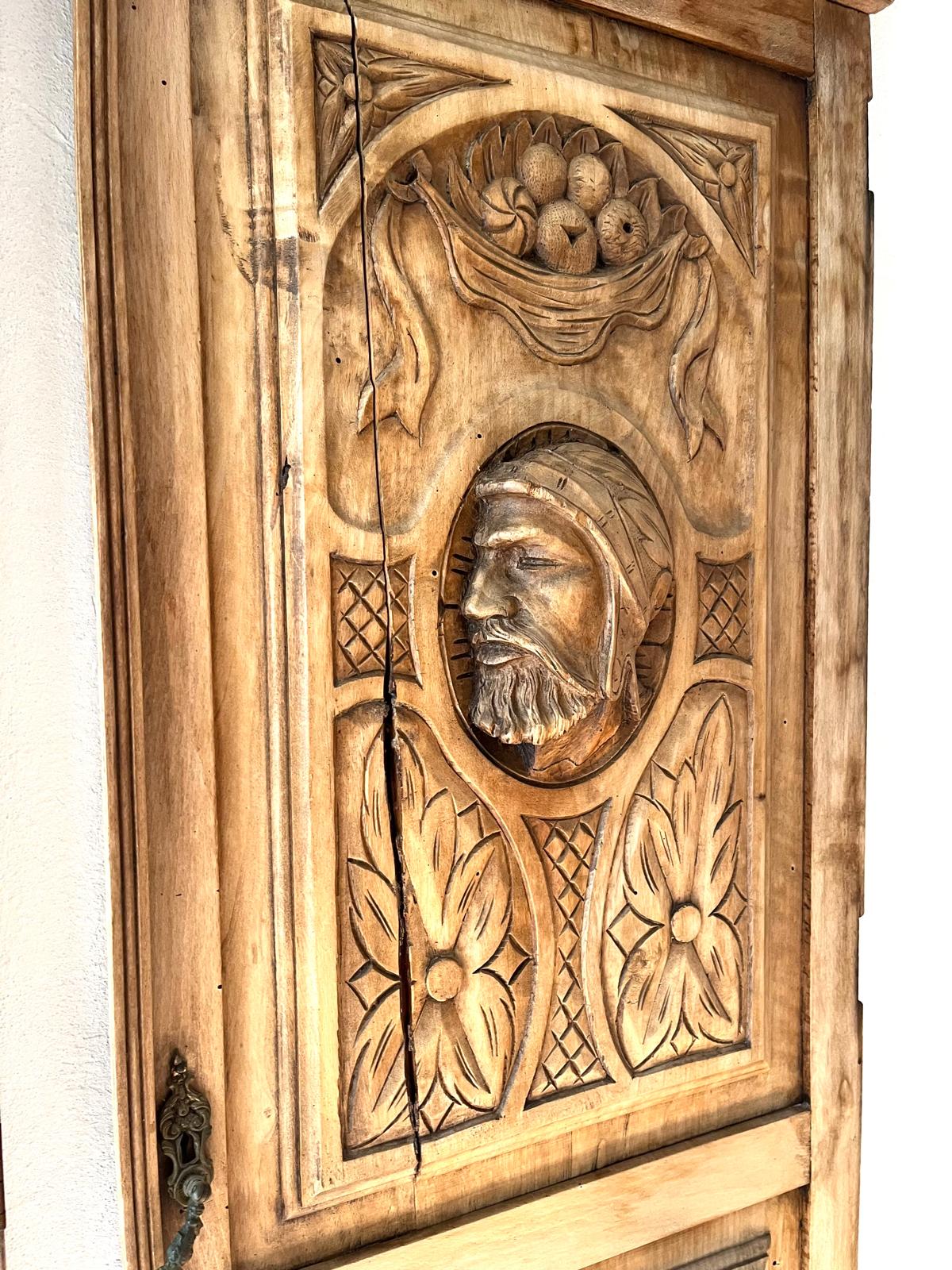
- Profiles of warriors and thinkers: the side panels form a pair of cameo medallions. The left panel depicts a warrior in a Roman helmet with a visor; the right, a bearded sage in a deep, hood-like cowl. Above them, lavish cornucopias are carved, filled with pomegranates and pears — symbols of eternal life and the workshop’s prosperity.
Chapter 4. An engineering challenge: a radial crack through time
Time spares not even oak. On the right panel, running right through the left wing of the floral ornament and the sage’s medallion, a deep through-radial shrinkage crack has appeared. This is a classic injury of antique wood, caused by centuries of humidity swings and temperature shock. Fortunately, the crack missed the carved face itself, leaving the portrait’s expression intact.
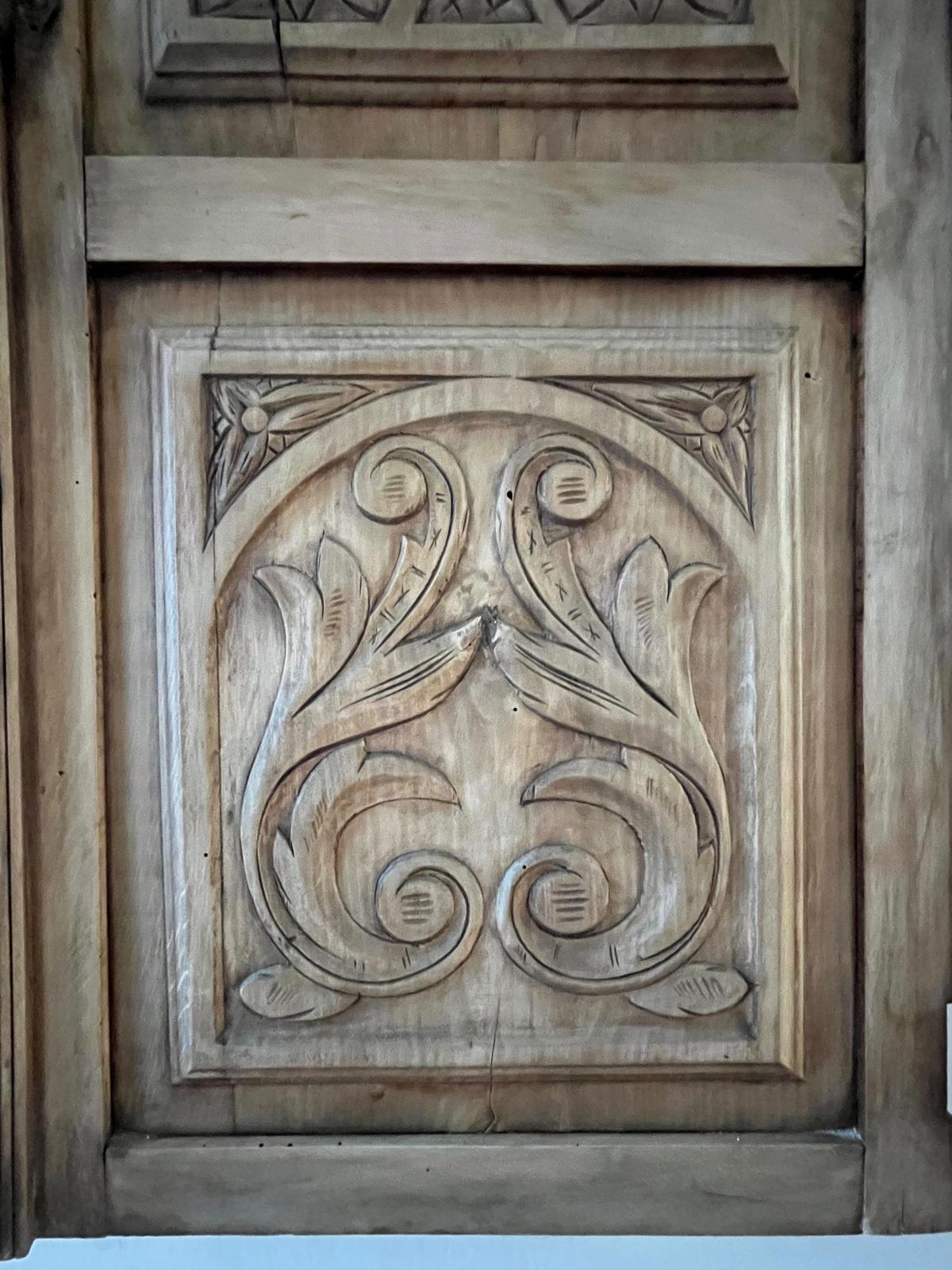
Conserving this crack will be our next large-scale project. We’ll completely abandon rigid fillers, which eventually fall out over time, and instead apply a method of elastic deep veneering and edge stabilization using mastics made from the oak’s own dust and natural resins, to preserve this great Flemish monument for centuries to come.