14 October 2026
Secrets of Hallmarks and TimeThe Code of Rubens in Oak: An Art-Historical Investigation into the Style of the Flemish Relief Carvings
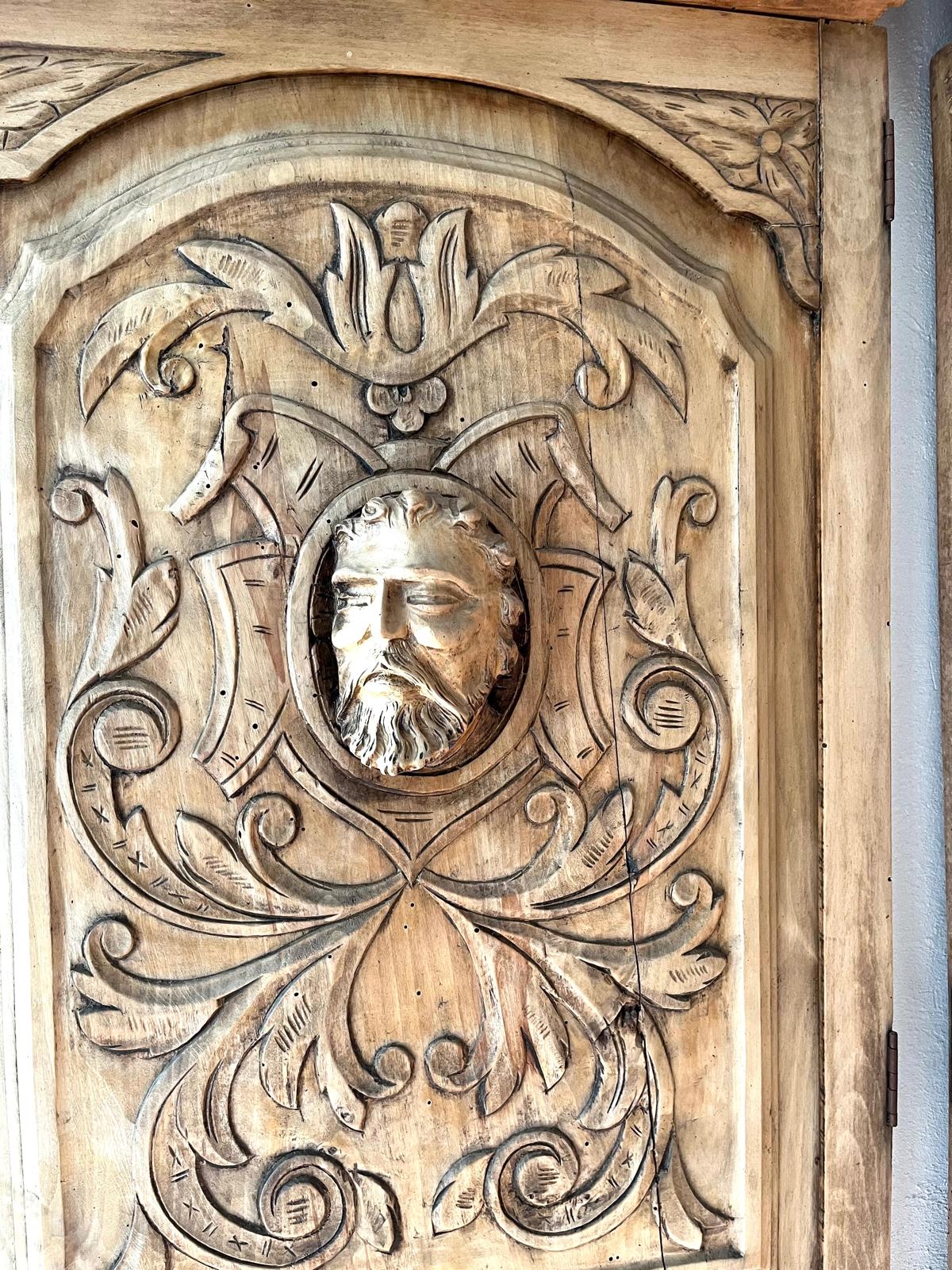
The Code of Rubens in Oak: An Art-Historical Investigation into the Style of the Flemish Relief Carvings
After a radical ammonia-based cleaning protocol fully freed the three antique oak panels from their opaque shell of century-old soot and sulfur, our restoration lab faced a fundamental question: the precise dating and stylistic attribution of the piece. An initial visual inspection confidently placed the object within the northern carving tradition, but pinning down the exact artistic school required deep paleographic and comparative analysis.
Our initial working hypothesis placed the reliefs in the era of Northern Mannerism and the ornamental albums of the famous Dutch architect Hans (Jan) Vredeman de Vries (1527–1609). However, comparing the master’s genuine printed plates against the cleaned oak panel revealed deep structural discrepancies that move this piece into an entirely different artistic league.
Chapter 1. A comparative morphological analysis: de Vries versus High Baroque
To establish the truth, we ran a detailed micro-structural analysis of the scrollwork’s sculptural quality, the volume of the fruit garlands, and the anatomy of the mascarons. For our comparison benchmark, we used Hans Vredeman de Vries’ original engravings from his foundational series Grotteßco en diverßche manieren (1564) and Caryatidum sive Athlantidum.
A stylistic comparison matrix for the reliefs:
| Anatomical feature | Hans Vredeman de Vries’ graphic work (Northern Mannerism) | The panels under study (Flemish Baroque school) |
|---|---|---|
| Relief character and volume | Flat, graphic, ribbon-like ornament. Dominated by two-dimensional arabesques and strict geometry. | A deep, lush relief. Sculptural volume with a strong projection off the panel’s plane and complex undercutting. |
| Garland ornamental code | Fantastical grotesques, dry geometric cartouches, stylized plant shoots. | Heavy, fleshy fruit festoons. Ripe figs, split-open pomegranates, and dense clusters of fruit. |
| Mascaron sculpting | A conventional, stylized theatrical mask, subordinate to the architectural frieze. | A dense psychological portrait. Live expression, deep facial creases on the forehead, anatomical precision. |
| Ideological context | A dry, constructive Protestant aesthetic, preoccupied with pure perspective. | The Catholic triumph of the Counter-Reformation. A celebration of earthly, fleshly abundance and drama. |
Chapter 2. Anatomical discrepancies: from graphics to flesh
A careful study of the oak panels’ structure revealed three key structural markers that completely rule out an attribution to de Vries’ era and place them instead in the golden age of Flemish Baroque, within the school of Rubens.
Marker 1. The sculptural fullness of the volutes
De Vries’ Mannerist ornamental sheets are always strictly constructive and orthogonal. His famous grotesques are made of thin, dry stems and geometric scrolls that resemble watch springs.
In the panels under study, we see a fundamentally different material physics. The acanthus scrolls and lower volutes are fleshy, voluminous, pulsing with life. This ornament isn’t subordinate to the flat surface — it dominates it. The entire fruit mass of the garlands (ripe figs, bursting pomegranates) is practically saturated with earthly juice — this is a direct sculptural projection of the paintings of Peter Paul Rubens and Jacob Jordaens, who celebrated the sensual abundance of Flanders.
Marker 2. The physiognomic drama of the mascaron
The central mascaron on the oak panel shows the highest level of portrait expression. This isn’t a flat decorative overlay in the Mannerist style, but a powerful Baroque image with deep-set eyes, carefully rendered tear ducts, and an individualized pattern of wrinkles.
This kind of oak carving — where the hardest of woods takes on the plasticity of soft wax — is characteristic of the great Flemish sculptors of the mid-to-late 17th century, such as Artus Quellinus the Elder and Hendrik Frans Verbrugghen. They carried Rubens’ painterly dynamism into monumental cabinet and church sculpture throughout the Southern Netherlands.
Marker 3. The allegorical concept of the medallions
The profiles of a warrior in an antique helmet and a bearded thinker in a deep hood, set within round cameos on the side panels, carry a deep philosophical subtext.
Unlike the decorative, armor-clad warriors of de Vries, what we have here is a classic Baroque pair of allegorical figures: Vita Activa and Vita Contemplativa (the Active Life and the Contemplative Life). This concept of harmony between a state’s martial valor and the wisdom of faith was a central intellectual pillar of 17th-century Flemish culture.
Chapter 3. The final expert conclusion
Based on the comparative analysis performed, the restoration workshop formulates the following scientific and art-historical conclusion:
The final attribution of the piece: the oak panels and cornice under study represent an outstanding example of High Flemish Baroque (the Antwerp/Mechelen school) from the mid-17th century (the 1640s–1670s), or else a flawless hand-made recreation of it from the historicist era (the Neo-Renaissance / Henri II style) in the second half of the 19th century. The object is entirely free of any graphic influence from Hans Vredeman de Vries’ Mannerism and traces directly back to the sculptural traditions of the school of Peter Paul Rubens.
This investigation clearly proves that only a total chemical cleaning of the wood’s pores, removing centuries of buildup, lets us see the old master’s true micro-sculpting and strip away the stylistic misconceptions surrounding unique monuments of European art.