12 September 2026
Secrets of Hallmarks and TimeA Voice from Ontario: The Bell Harmonium and the 1887 Patent
A Voice from Ontario: The Bell Harmonium and the 1887 Patent
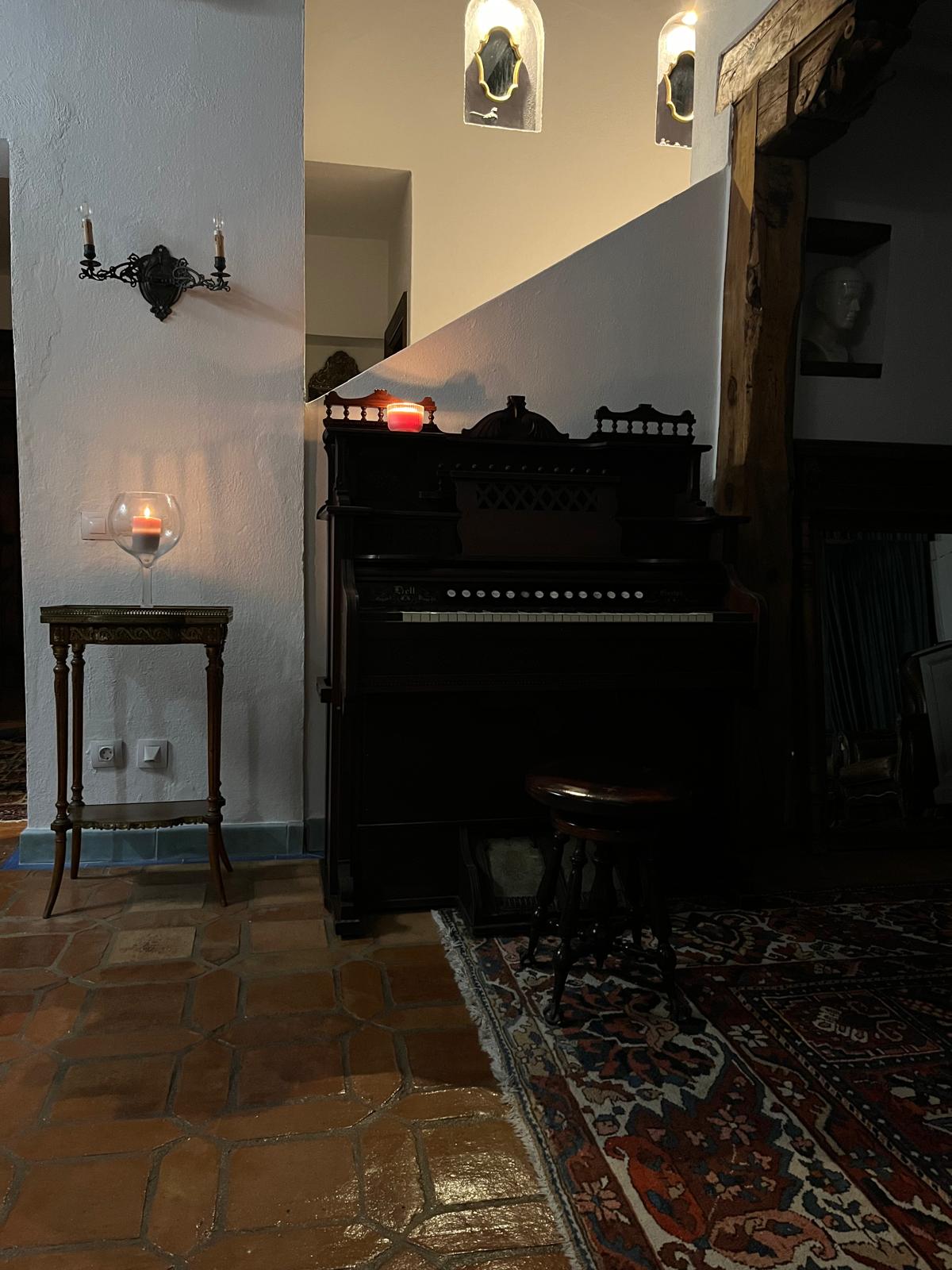
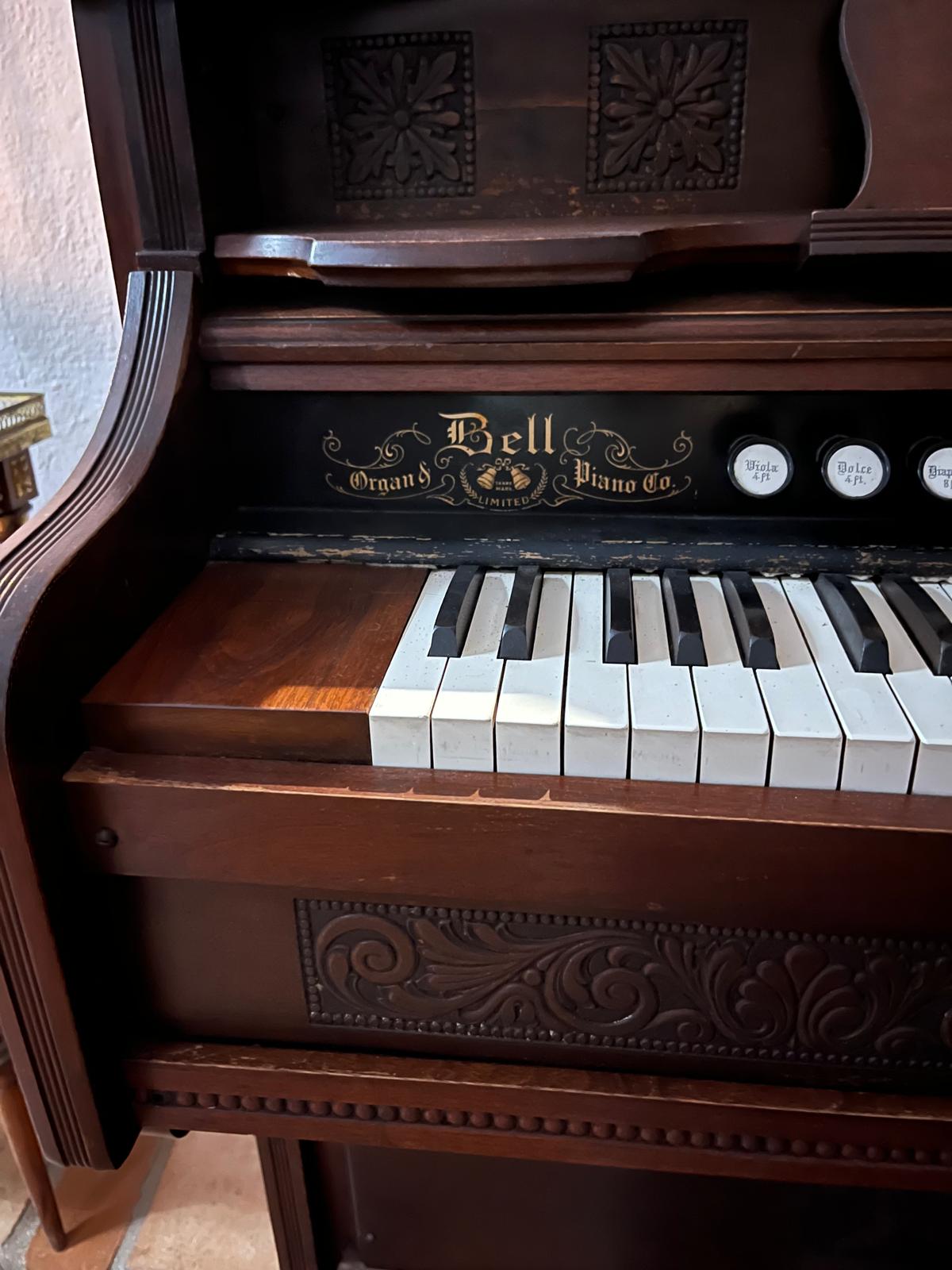
In the space of our Home, at the foot of the staircase, stands a monumental instrument that never fails to catch the attention of researchers and guests alike. It is an antique Victorian-era harmonium, known in historical terms as a “cabinet organ” (or reed organ).
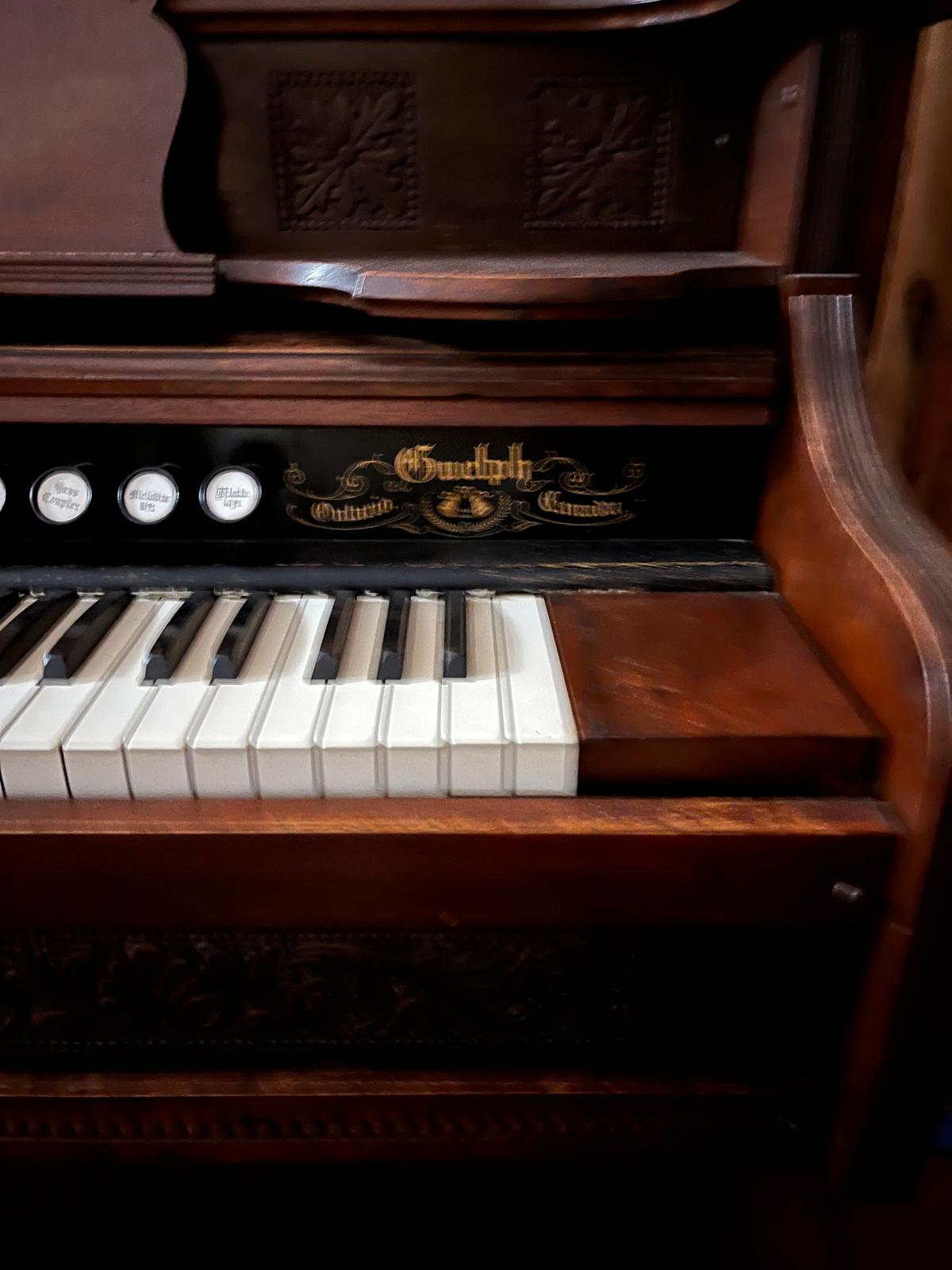
Above the keyboard, the factory’s elegant gold nameplate has survived intact: Bell Organ & Piano Co., Guelph, Ont. This mark carries us back to late-19th-century Canada. The company, founded by brothers William and Robert Bell in 1864, had earned an impeccable international reputation by the end of the century. Their instruments were supplied to Europe’s leading royal households, including the residences of Britain’s Queen Victoria and the Spanish monarchs.
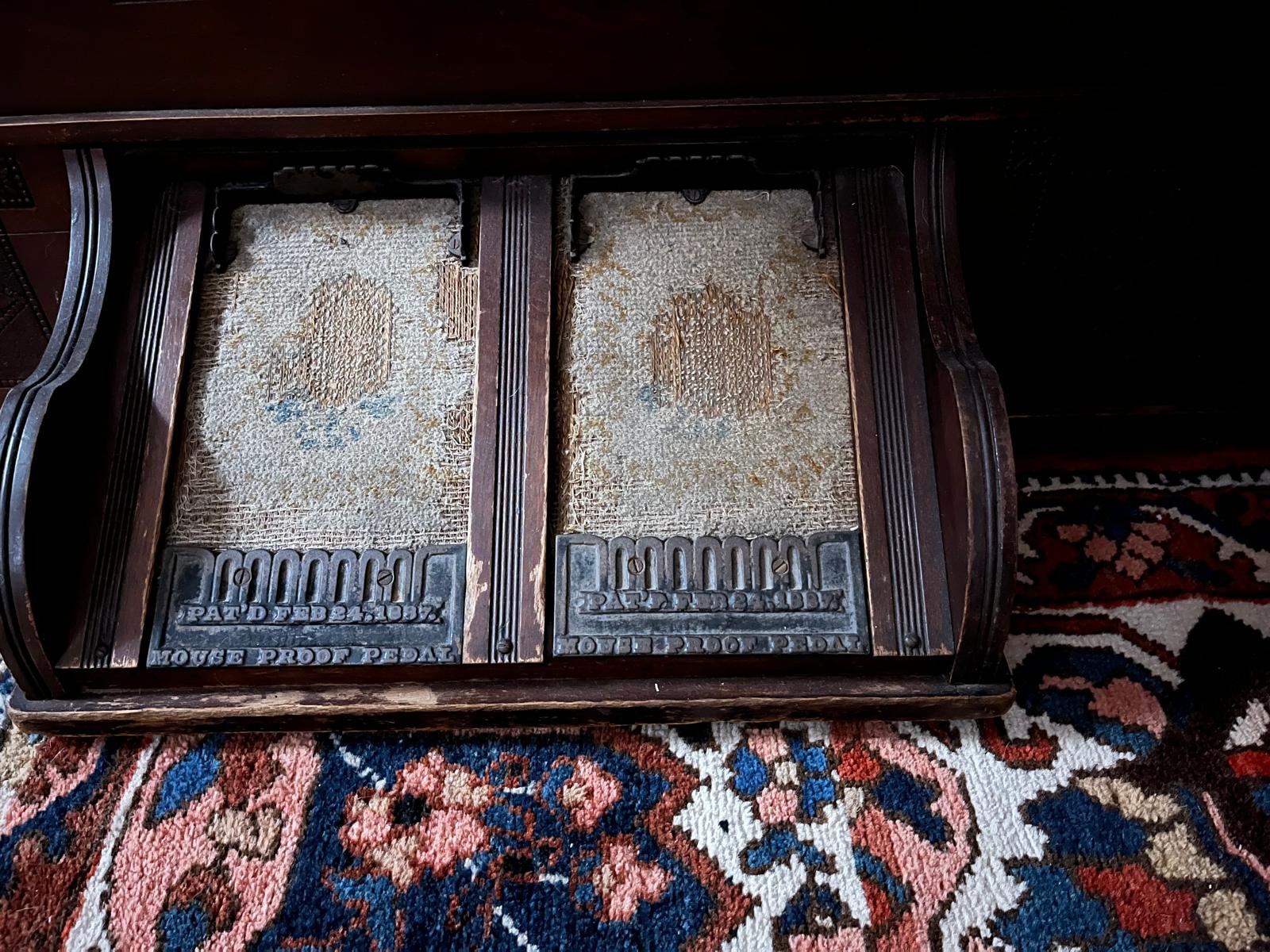
For a long time, the cast-iron elements at the instrument’s base went unexamined. But in the course of a joint analysis of macro photographs with the AI Gemini, we managed to decipher a hidden mark located right on the pedals: PAT’D FEB 24, 1887. MOUSE PROOF PEDAL.
And that’s the whole charm and magic of Environmental Self-Reflection: we live for years side by side with astonishing objects, looking at them every day, and then, in a single moment, it turns out that an entire era is encoded within them — its daily life, its concerns, and its engineering genius.
The inscription “Mouse Proof Pedal” is a unique piece of engineering from the late 19th century. In that era, harmoniums were an important feature of country estates, where field mice posed a serious threat to musical instruments. Getting inside the casing, mice would destroy the felt, cloth, and leather bellows chambers. Bell’s engineers patented a design in which the heavy cast-iron pedal flaps, when at rest, sealed the openings airtight, turning the instrument into a fortress impregnable to rodents.
🛠️ The Anatomy of Sound: How a Harmonium Works
Unlike a classical pipe organ, where air is forced into enormous pipes, the Canadian cabinet organ works on a fundamentally different principle. At the heart of the harmonium is a vacuum bellows system.
When the musician alternately presses the foot pedals, they set in motion the massive folding leather bellows at the bottom of the casing. In the American and Canadian systems (unlike the European one), air isn’t pushed outward but instead sucked inward, creating a vacuum inside the instrument. When a key is pressed, a valve opens, a stream of air rushes inward and sets the free-swinging metal reeds — hidden in special wooden cells — vibrating. It’s the vibration of these brass reeds that produces the deep, dense, slightly humming sound so reminiscent of a church organ.
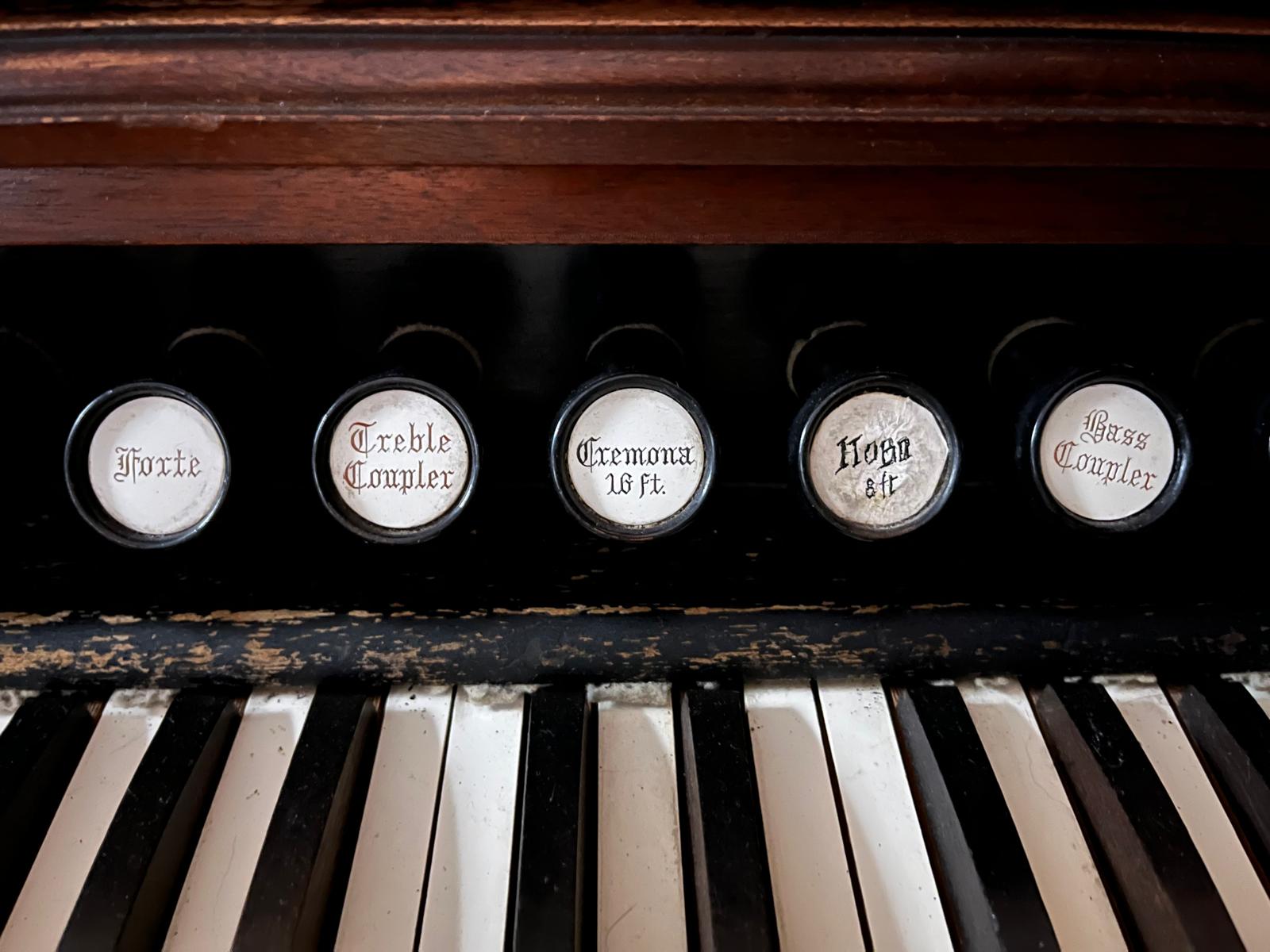
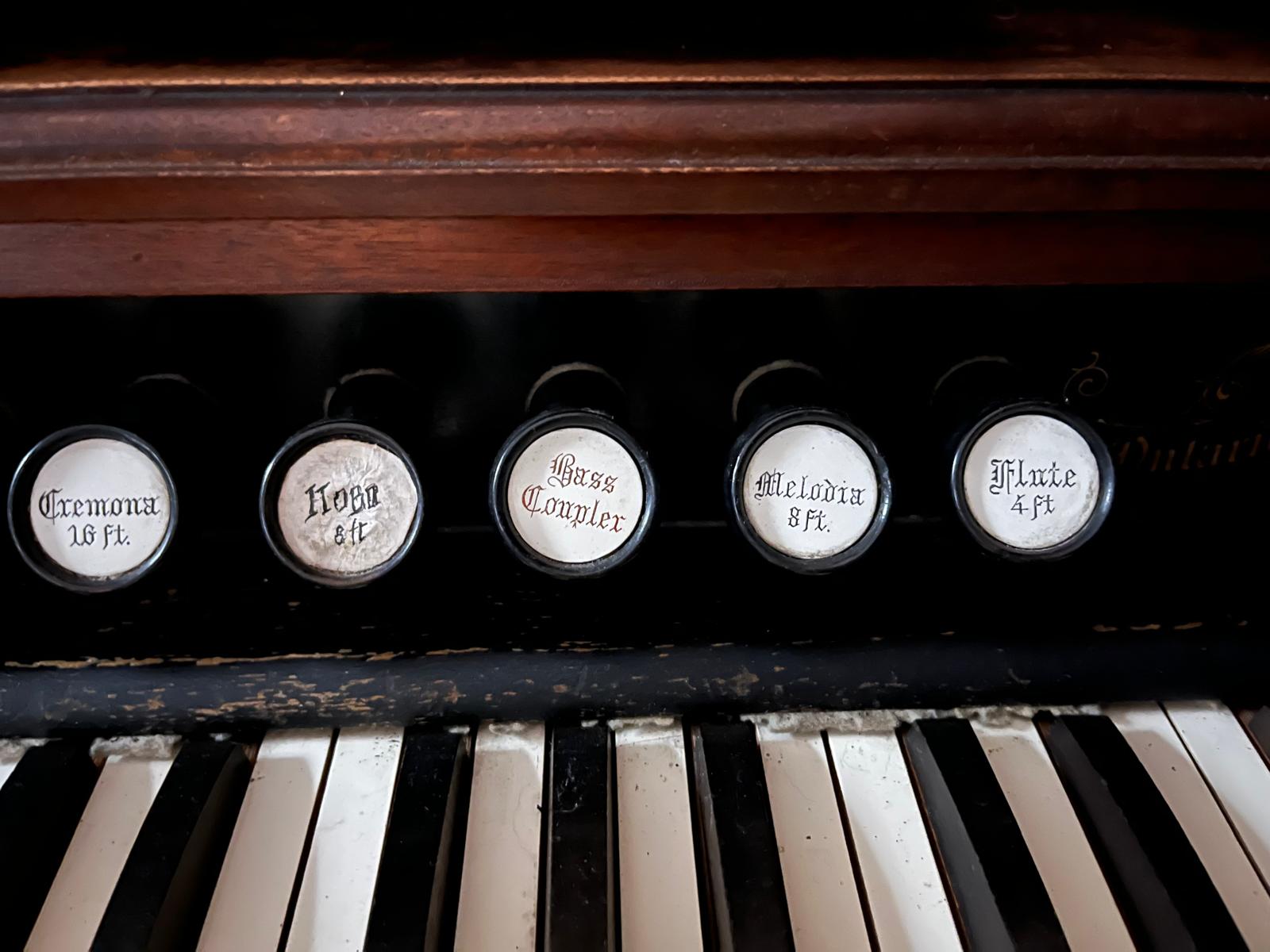
The porcelain stop knobs above the keyboard (such as Vox Humana, Cremona, Diapason) control wooden shutters above the reeds. They alter the volume and character of the airflow, letting the musician imitate the sound of a human voice, a cello, or a flute.
🌲 The Architecture of the Case
The instrument’s case is a fine example of Victorian furniture craftsmanship. The Bell factory was renowned for its joinery workshop. To protect the sensitive mechanics from swings in humidity and temperature, fine woods were used — most often solid wood and veneer of noble black walnut or seasoned oak.
The front panels are adorned with deep hand-carved floral motifs and severe geometric lattices, which served not just an aesthetic purpose but also acted as sound windows, letting the dense acoustic wave escape the casing unimpeded.
⛪ Where Cabinet Organs Were Heard
In the late 19th century, Bell harmoniums were the true multimedia centers of their time. They served two crucial roles:
A substitute for the church organ. Small provincial churches, chapels, and mission parishes around the world (from Canada to Australia) couldn’t afford an expensive and bulky pipe organ. The compact harmonium handled sacred music and choral accompaniment perfectly.
A symbol of domestic prosperity. In the Victorian era, having a cabinet organ in a country house’s parlor was the chief mark of a family’s high status, prosperity, and cultivation. Households gathered around it in the evenings, singing hymns and parlor songs to its accompaniment.
⏳ Why They’re Forgotten Today
The decline of the harmonium era came in the 1920s, for three main reasons:
The triumph of the piano. Grand and upright pianos became cheaper to produce. Their bright, percussive, dynamic sound suited the increasingly popular jazz and popular music far better, pushing out the organ’s languid tone.
Technological progress. The arrival of gramophones, radio receivers, and later electronic organs (such as the Hammond organ in the 1930s) changed the home entertainment industry forever. Music no longer had to be produced by physical labor, endlessly pumping pedals with one’s feet.
The difficulty of restoration. A harmonium is an incredibly fragile organism. Over time, the bellows’ leather dries out and cracks, moths eat the felt, and the brass reeds oxidize and go out of tune. Finding a craftsman today capable of bringing a Bell vacuum system back to life is an extremely difficult task.
…When a key is pressed, a valve opens, a stream of air rushes inward and sets the free-swinging metal reeds vibrating. The keys themselves are a particular point of pride for the Bell craftsmen. Unlike modern plastic, they’re topped with thin plates of natural ivory. Over time these have taken on a noble cream tone, but they’ve kept their unique natural texture and the remarkable feeling of “living warmth” when you touch the keyboard.
Today this instrument stands silent in our Home, but its presence fills the interior with genuine historical depth, turning an antique piece from Covent Garden into a tangible bridge between past and present.